A collection of observations about butterflies here in Scotland and notes of the butterflies I have seen when on family holidays.
Wednesday, 17 August 2022
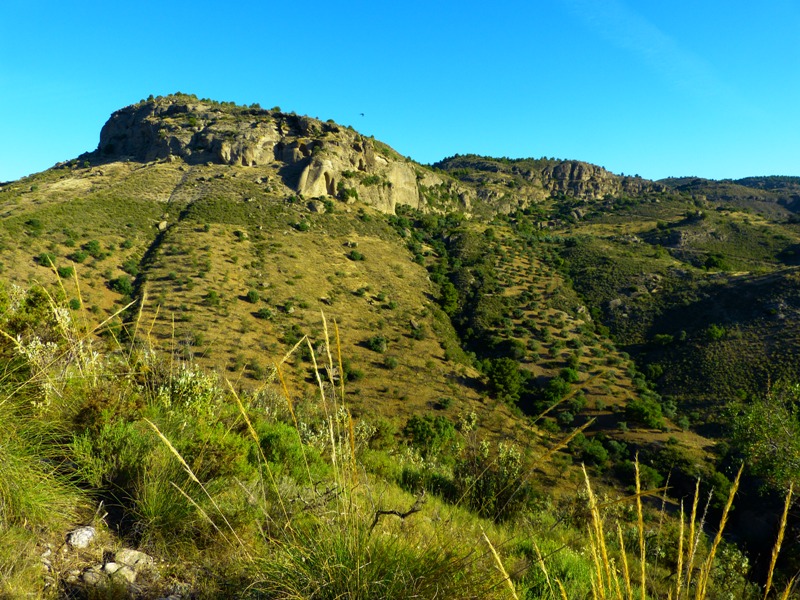
Sierra Nevada Butterflies - June 2022
Wednesday, 3 August 2022
Malaga Butterflies - June 2022
At long last we made it back to Spain this summer after having to cancel our planned holiday for the last two years. We went to the same villa we have visited on and off for the last ten years, but this year we were joined by our now grown up children and their partners. The villa is on the outskirts of a village called Alora, which is about 45 kilometres north west of Malaga. And this year we went during the first two weeks in June, whereas previously we visited in July, during the school holidays.
I regularly saw a Long-tailed Blue flying around a Polygala bush and zipping around the garden. However, it never appeared to land for more than a second. Other garden visitors were Small Whites, Geranium Bronzes and the odd Bath White.
A visit to an area next to the River Guadalhorce specifically to look for African Grass Blues. Eventually I managed to find a couple of very worn individuals which were being chased by Mediterranean Skippers.
Other butterflies there were Southern Brown Argus, a Southern Blue and Mallow Skippers.
Generally, I think this was a better time of year to visit, as there were certainly more butterflies flying around. The one butterfly that I normally see in the summer is Lang’s Short-tailed Blue, but we were too early for that. I find it interesting visiting the same area at different times of year. We have now been to Alora in April, June, July and September.
Tuesday, 19 July 2022
Northern Brown Argus, continued ...
As an update to my previous post.
I have been taking part in the Scottish Borders Northern Brown Argus surveys recently. I have seen a disappointingly low number of butterflies, possibly because of the weather on the days when I have been able to survey the local area. The area is becoming quite overgrown, as it has not been grazed for about the last 15 years. It is a bit of a worry that the Rockrose may become completely swamped.
However, last week I surveyed the valley above our house including a large area of grassland above the valley. I found quite a number of patches of Rockrose and I was amazed that on almost every patch I found Northern Brown Argus eggs.
When I arrived home I thought I should check out my area of Rockrose and I was delighted to see quite a number of eggs here. So, it seems as though there may have been more than one Northern Brown Argus here. Despite me regularly checking the area, I only saw the one. Hopefully next year there will be more.
Monday, 4 July 2022
Northern Brown Argus
I was amazed and delighted to spot a Northern Brown Argus, Aricia artaxerxes, flying in our garden when I took the dogs out one day last month. There is a colony of Northern Brown Argus about 500 metres up the valley from us, but they are on the other side of a mature woodland, so I can’t imagine it has flown in from there.
Three years ago I planted out some Rockrose plants on a bank close to the house. Rockrose is the foodplant of Northern Brown Argus and I realised that the stream that runs through our garden is the same stream that runs through the colony up the valley. So, I took some cuttings and successfully rooted ten plants. They are now a good size, but I don’t think the area is large enough to sustain a population of Argus.
Two years ago I briefly saw a Northern Brown Argus on the drive right outside the house, so it isn’t the first time I have seen one here. That time I only saw it briefly on one occasion. This year’s butterfly was here again two days later, so it stuck around a little longer.
There has been very little sunshine in recent weeks, so not ideal weather for seeing if there are any other Northern Brown Argus about. I will carefully check the leaves of the Rockrose a little later in the season to see if there are any signs of egg-laying.
Wednesday, 18 May 2022
Small White, Pieris rapae
On 26th July last year I saw a female Small White laying eggs on some Bittercress outside my study window. As this was in the hen run I went out and lunchtime and dug up the three small plants and put them in a pot.
It circled the garden a couple of times and then landed in an ornamental maple tree. Almost immediately heavy drizzle started to fall and it continued to drizzle for the rest of the day and the following morning. Later that day I found it still in the same spot and it flew off mid-afternoon. So, it spent the first three days of its life waiting for suitable weather to fly!
What I find really interesting is that of the nine chrysalises I had, seven emerged, but the other two remained in the pupal state. I hadn’t been expecting any of them to emerge, as we would normally only expect to have two generations of Small Whites a year here. The seven chrysalises that eclosed formed a third generation of the year.
Fast forward to spring this year and I kept an eye on the two remaining chrysalises. On 3rd May I noticed that they had started to show the colour of the wings. Two days later I spotted a male Small White sitting by its empty chrysalis case. The following day a female Small White emerged from the second chrysalis.
Friday, 1 April 2022
East Lothian Grayling Project
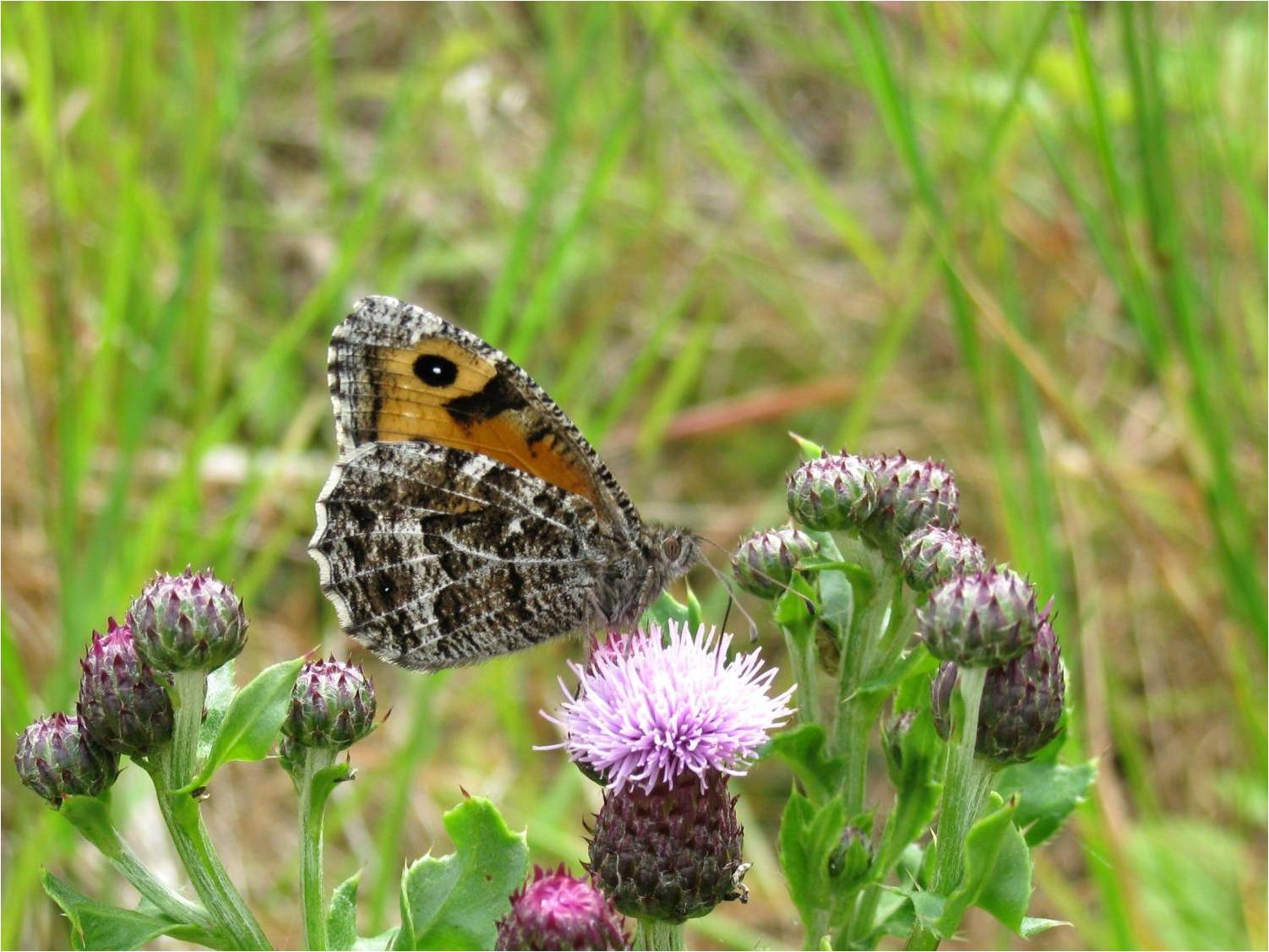
For the last four years I have been involved with an exciting project to try to create a new habitat for Grayling butterflies, Hipparchia semele.
Grayling are only known to occur in three small colonies in East Lothian. One is in a steep-sided valley, or cleugh, in the Lammermuir Hills. The other two locations are ex-industrial sites – one on a disused railway siding of an old opencast coal mine called Blindwells, the other a re-landscaped tip from an old coal mine called Meadowmill.
The colony at Blindwells was discovered in 2009 and it is suspected that Graylings could have been there for a few years before that. In 2011 they were found on the old coal tip at Meadowmill, which is just across the road. This colony is now the larger of the two and I think the maximum count of Grayling seen there was 80.
There have long been plans to build a new town at Blindwells, but there seemed to be so many issues surrounding this that we doubted it would ever happen. However, in 2017 we were alarmed to see fencing going up around the site and bulldozers moving in.
So, very quickly, a plan was hatched. The idea really came from a countryside volunteer who persuaded the East Lothian Countryside Rangers that we should try to translocate the Blindwells Grayling colony to somewhere safe.
East Lothian Council own another ex-industrial site, Levenhall, which is being restored for recreation and wildlife. The Countryside Ranger who works there identified a perfect south-facing slope. I just happened to be in the office one day and overheard the Parks Manager complaining that he was going to have to pay to dispose of a few hundred tonnes of crushed concrete from a depot that had been demolished. This, we thought, would make the perfect material to create a new Grayling colony.
In 2018 we attended the AGM of the East of Scotland branch of Butterfly Conservation, where they said that there was funding available for projects. Perfect, we secured funding to scrape the top soil from a site about 50 metres long by 30 metres. On one side we spread the crushed concrete in three long piles to replicate the railway sidings and on the other side of the site we asked the contractor to leave random piles of crushed concrete. Hopefully this would provide a variety of different slopes and orientations.
With the help of more volunteers, including the Junior Rangers, we removed rubbish (it is amazing how much wire and plastic there was amongst the concrete). The area was then seeded with Red Fescue and Sheep’s Fescue (the foodplant of the Grayling caterpillars) and dry meadow mix wild flower seeds were scattered along the lower slope. Between the two areas was a grassy strip, which has also had wild flower seeds, including Yellow Rattle sown.
The next problem was how to get the butterflies there. We devised several plans. Initially we searched for caterpillars at Blindwells. We were told they were easy to find at night using a torch, as they climb up grass stems to feed. Five of us crawling in the grass one night for two hours unearthed one caterpillar in May 2018.
So, we then decided to try to locate eggs in August. The sidings at Blindwells were now protected by Heras fencing, but we needed permission and full protective clothing to get in and this had to be arranged a few weeks in advance. By the time we managed to get in we discovered the site covered in dust with a diesel generator running next to it. Sadly, we found no eggs.
So in July 2019 we decided to look for eggs at Meadowmill. They were reasonably easy to find and we collected 36 eggs and we took them to Levenhall, where they were put on the now well-established Fescues.
In the summer of 2020 we regularly monitored our new site in the hope of seeing adult Grayling flying, but sadly none were seen. So, in July the Countryside Ranger caught 12 adult Graylings at Meadowmill and translocated them to Levenhall. They were put in a cage overnight, which was removed early the next morning. Five of them were still there at lunchtime, so we hoped they may have laid some eggs.
Unfortunately, we didn’t manage to record any adult Grayling there again in the summer of 2021. So, it looks as though that attempt may also have failed.
Creating a new site for Grayling butterflies has never been done before, so we made it up as we went along. We had a lot of good fortune and it has been really exciting to be involved in such a project.
We are now wondering if there is some crucial element missing from our new site. We have a south-facing slope with Fescues growing on it, but what else could it need. Two of the existing colonies are associated with coal, but the other colony is in a natural valley. Do they need a particular chemical make up in the soil, is there some sort of symbiotic relationship with ants, possibly it is something even more subtle such as bacteria, or a fungus that is required. Maybe things will change over time.
We will certainly keep monitoring the site and consider how we can persuade Graylings to move in. Last year 17 species of butterflies were recorded at the new site, so it is clearly attractive to butterflies.
.jpg)
%20-%20Copy.jpg)

.jpg)
.jpg)
.jpg)
.jpg)
.jpg)