I am no expert photographer, preferring to capture the moment than get a perfectly composed shot. The pictures on my blog are either taken with a compact Canon, a Panasonic Lumix FZ150 or on my phone.


Showing posts with label Argynnis aglaja. Show all posts

Sunday, 29 March 2020

East Lothian Butterflies 2019 Part 2


Continuing on from my previous post ...


Small Copper, Lycaena phlaeas
The Small Copper started the year very well. The first one was recorded on 17th April and two more were seen the following day. The first generation did very well and the second generation started earlier than normal and was seen in good numbers until the middle of August, when numbers crashed. It seems that the periods of heavy rain knocked numbers down. The last Small Copper was recorded on 20th September, six weeks earlier than last year.


Wall Brown, Lasiommata megera
As with many other species in 2019 the Wall Brown appeared early and the spring generation was larger than we would normally expect. Although the summer generation was larger than the spring generation, it was closer to the average number that we have seen over the last few years.


Holly Blue, Celastrina argiolus
The most exciting news of the year was the discovery of a colony of Holly Blues in Gullane. Every year for the last ten years we have had one or two records of Holly Blues. There had been a colony at Newhailes for a number of years, but I don't think they have been seen there since 2013. The other records had all been in the Gullane to North Berwick area and I always thought there must be a colony hidden in a large garden somewhere in the area. On 20th April a Holly Blue was seen near the coast in Gullane and despite careful searching of the area is wasn't seen again. However, on 3rd August another record came in from outside a garden in the village. Over the next few days several other records from the same area were reported with up to seven individuals being seen there. Nine days later another small colony was found in Gullane about 700 metres away. The last record received was from Archerfield about one and a half kilometres away.
All of these records were from quite public areas, so I doubt they are the location of the original mystery colony. It will be really interesting to see how things develop over the next few years.


Green Hairstreak, Callophrys rubi
The Green Hairstreak is found in a few remote colonies around East Lothian, mostly in the Lammermuir Hills. Because of this we don't get many records. The most easily reached site where they are found is Saltoun Wood, but this colony has suffered a serious decline. There had been a fire there early last year and this year we only recorded three individuals in that area. The three records we received were on 30th April, 15th May and 9th June.


Small Heath, Coenonympha pamphilus
2019 was a good year for Small Heaths. It was notable hat they did particularly well in the summer generation. The first record was on 10th May and they were seen through to the 7th September.


Common Blue, Polyommatus icarus
Common Blue did very well in 2019. The first record was on 24th May and I received almost double the normal number of records. As has been noted with other species, it is the year after a good season that the number of butterflies increases.


Meadow Brown, Maniola jurtina
Meadow Browns also did very well in 2019. I was surprised that we didn’t see more in 2018 when we had such good weather, but I realise that the number we see reflects the weather of the previous year. The first record in 2019 was on 18th June. They had quite a short season, but were seen in greater numbers than in the previous six years.


Ringlet, Aphantpopus hyperantus
The number of Ringlets recorded in 2019 was about average, but they were condensed into a shorter season than normal. The first record was on 18th June and they were initially slow to build up their numbers. However, they peaked in the middle of July and then quickly dropped away, with the last record being on the 15th August.


Small Skipper, Thymelicus sylvestris
The Small Skipper has been increasing in number year on year, since it was first discovered in East Lothian in 2011. The trend continued in 2019 when we received records of 677 skippers, an increase of over 50% on the previous year. The first record was on 22nd June and they were seen in great numbers in July. They are also continuing to extend their range in East Lothian.


Dark Green Fritillary, Argynnis aglaja
Dark Green Fritillaries had an amazing year in 2019 with almost twice the normal number being seen. The first record was on 23rd June and they were recorded until 10th August. Dark Green Fritillaries are mostly found on coastal sites in East Lothian but can also be found in one or two remote valleys in the Lammermuir Hills.


Grayling, Hypparchia semele
Grayling are found in three locations in East Lothian. One of these is very remote cleugh in the Lammermuirs and I didn't receive any records from there this year. The other two sites are at Blindwells and Meadowmill. The Blindwells site is about to be lost to a large housing development, but thankfully the contractors have fenced off the area where the Grayling are found. However, this remains a very small area surrounded by earth moving equipment. Amazingly, on the only occasion anyone was able to visit there, they recorded 13 Graylings flying. A few hundred yards away at Meadowmill Graylings were recorded in much greater numbers than in previous years. The first record was on 26th June and records of over 400 Graylings were received.


Northern Brown Argus, Aricia artaxeres
Northern Brown Argus are only known to exist in four small colonies in East Lothian. They are all quite remote and isolated, so take a bit of dedication to get to. Because of this I only received one record of a Northern Brown Argus on the 20th July. I know they did very well in the Scottish Borders and I have no reason to believe that they wouldn't have done well here, too.


I didn't receive any records for Large Skippers in 2019, but I think they will still be out there along the foothills of the Lammermuirs. Neither did I receive any records of Small Pearl Bordered Fritillaries. They are only known from a couple of sites in East Lothian and we never get records of more than one or two in a good year! Given the prolonged period of great weather earlier in the summer I was surprised that we didn't receive any records of Clouded Yellows or any other unusual migrants.

Once again, I want to send a big thank you to everyone who sent in their records to me last year. The combined efforts of everyone creates a very good picture of how butterflies are doing in East Lothian.

Tuesday, 9 August 2016

Some Borders Butterflies

I have been particularly busy this year and the weather hasn't been the best for looking for butterflies. However, I have still managed a few trips down to the Scottish Borders to look for butterflies, some of which we don't get here in East Lothian.

Here are the highlights:

Between sessions of clearing the house and keeping the grass and woodlands in check I managed a quick visit to a valley just above our property in Selkirkshire on the 18th June.


I knew this was a good site for Northern Brown Argus, Aricia artaxerxes, but I have never seen them in such numbers. They are such lovely butterflies and I feel so lucky to have such a great site for them close to where we will be living one day.


I think I will indulge in another picture!!


Another thrill for me was the sight of a small orange butterfly - a Small Pearl Bordered Fritillary, Boloria selene, which flew past me and then disappeared. On my way back down the valley I searched through the vegetation and was delighted to find it again. This time it posed nicely for me in the grass. I had thought I had seen one there in the past, but I wasn't 100% sure, so it was good to get a definite identification.


Six days later I took a friend down to the Berwickshire coast where we hoped to see Small Blues, Cupido minimus. Although numbers were lower than we have seen in the past it was great to see these lovely wee butterflies again.


It was quite worrying to see how dried up their food plant, Kidney Vetch, was, not because of the heat but because of the constant North-East wind coming in from the sea. However, we noticed that next to the railway the Kidney Vetch was doing much better out of the wind.


We met the Borders' butterfly recorder while we were there and he showed us where we would see Large Skippers, Ochlodes sylvanus. Despite the wind we were lucky to spot two or three. Two years ago these found their way into East Lothian, but they haven't been spotted since, possibly because the weather has been so poor.


On our walk back I was pleased to see a Wall Brown, Lasiommata megera. We have these in East Lothian, but I still haven't seen one here this year.


Two days ago on my way back down to Selkirkshire I called into a site near Melrose where I know Scotch Argus, Erebia aethiops, are found. These are a fairly scarce butterfly which are able to fly in dull, wet weather when other species are hiding away. I saw them last year flying in the rain!


They are so difficult to get pictures of, as they are very easily disturbed and when they land they always seem to go low down in the grass. I was pleased to be able to get the picture above and then delighted when I was walking back to the car to see the butterfly below feeding on a Thistle flower.


After lunch I returned to the valley above our property where I saw a lot of Small Skippers, Thymelicus sylvestris. This is another butterfly that I thought I had seen before there, but I hadn't seen it for long enough to be sure. It was great to see them in such numbers.


The Northern Brown Argus were also still flying and I saw a few Dark Green Fritillaries, Argynnis aglaja


To add a bit of colour there were also Common Blue, Polyommatus icarus, flying among the multitude of brown butterflies such as Meadow Browns, Ringlet and Small Heaths.


It was great to see so many different butterflies and it is really exciting to think that in a couple of years we will be living in amongst them all!

Tuesday, 29 March 2016

East Lothian Butterflies 2015 (2)

Continuing on from my previous post ...

Green Hairstreak, Callophrys rubi
We only discovered Green Hairstreaks for the first time in East Lothian in 2014, although I am sure they were probably hiding away in their remote locations for several years before that. This year the first record was on 20th May and they were recorded until 7th June. They were mostly recorded in the Lammermuir Hills, but also in an area of lowland woodland.


Wall Brown, Lasiommata megera
There were two distinct generations of Wall Browns between 30th May - 2nd July and 16th August - 19th September. They seemed to be quite abundant this year and I have been told that they were particularly abundant on the coast in the Scottish Borders. This is good news as they are struggling in southern England, possibly as a result of climate change.


Painted Lady, Vanessa cardui
I had thought that 2015 was a poor year for Painted Ladies, as I only saw one all year! However, I received quite a few records from other enthusiasts. Considering the number of Red Admirals that arrived here in July, I was surprised there weren't more Painted Ladies, though. The first record I received was on 11th June and the last one seen was on 26th October.

Common Blue, Polyommatus icarus
The first Common Blue recorded in 2015 was on 11th June and they were recorded through to 29th September in good numbers. There was no clear division between the two generations. For some reason there was a much higher proportion than normal of females reported than in previous years.

Northern Brown Argus, Aricia artaxeres
I am only aware of four sites in East Lothian where Northern Brown Argus occur. Three of these sites are smaller than the average sitting room. This year I only received records from two sites with the earliest being 20th June and the latest was on 7th August.

Ringlet, Aphantpopus hyperantus
Ringlets were seen in their usual good numbers between 24th June and 16th August. They seemed to have a longer season than in previous years, possibly because the weather was so poor.


Meadow Brown, Maniola jurtina
As usual Meadow Browns were very numerous in 2015. The first record was on 27th June and they were seen through to 3rd September, with a peak in numbers in early August.

Dark Green Fritillary, Argynnis aglaja
The Dark Green Fritillary is mostly found on the coast of East Lothian, but there are a few inland sites where they are also found. The first record in 2015 was on 27th June and they were seen until the 15th August.

Small Skipper, Thymelicus sylvestris
The Small Skipper was first recorded in East Lothian in 2011 at Aberlady Local Nature Reserve. It has since done incredibly well and spread along the coast and is also found at a couple of inland sites. In 2015 it was recorded between 28th June and 29 August.

Grayling, Hypparchia semele
I am only aware of three sites where Grayling occur in East Lothian. One of those sites is in an area that is due to have houses built on it and we are currently unable to access it. All of the records I received in 2015 were from a nearby site, which is an old mining spoil heap. The first Grayling was recorded on 3rd July and they were seen till 6th August.

Small Pearl Bordered Fritillary, Clossiana selene

The only record of a Small Pearl Border Fritillary this year was on 3rd July when I briefly saw one at a site in the Lammermuir Hills. This is the only place I am aware of them occurring in East Lothian, so I hope they are able to hang on there.

The only butterfly that I was hoping to see in East Lothian that we didn't record in 2015 was the Large Skipper. They had been seen just inside the East Lothian boundary in 2014 and we had high hopes that they would increase in number or progress along the coast as so many other species have done. They may have been there, but due to the lousy weather no one was there to spot them!  With a bit of luck we will find them again in 2016.

It is fantastic having so many people contributing to the butterfly records in East Lothian. We are building up a really good picture of what is going on during a very interesting period in the distribution of butterflies here. I wonder if we will have any new butterflies in 2016?


Monday, 25 November 2013

East Lothian Butterflies 2013

The weather in 2013 was a big improvement on the previous two years. Although the winter wasn’t particularly hard, it dragged on for a long time, and spring didn’t arrive until half way through April. This, and I think last year’s very poor weather, had an impact on the number of butterflies early in the year. Other than a couple of sightings in March, the first records of butterflies didn’t come in until 26th April!
However, from mid April until the end of August, the weather was reasonably warm, dry and sunny. It was never particularly hot, so there was a continuous source of food plants and the number of butterflies really picked up during July and August. The weather in September and October was rather disappointing, so we didn’t get the influx of butterflies migrating north, that we were hoping for. The first frosts arrived in early November, putting an end to the butterfly season.

Peacock, Aglais io
The first record I received this year was a Peacock, seen on North Berwick Law on the 1st March. There were a few seen throughout the spring, but the number seen dropped at the end of May. In August, though, there was a sudden explosion of Peacocks when the next generation appeared. Numbers through August were the highest I can remember seeing.
Peacock

Small Tortoiseshell, Aglais urticae
The first record this year of a Small Tortoiseshell in East Lothian was on 2nd March. After that they appeared regularly through to May. Like the Peacock their numbers picked up considerably with the new generation in July and August.
Small Tortoiseshell

Painted Lady, Vanessa cardui
One Painted Lady was recorded on 25th April, but it wasn’t until the end of June that more were seen having worked their way northwards through Europe. They weren’t seen up here in great numbers this year, though.
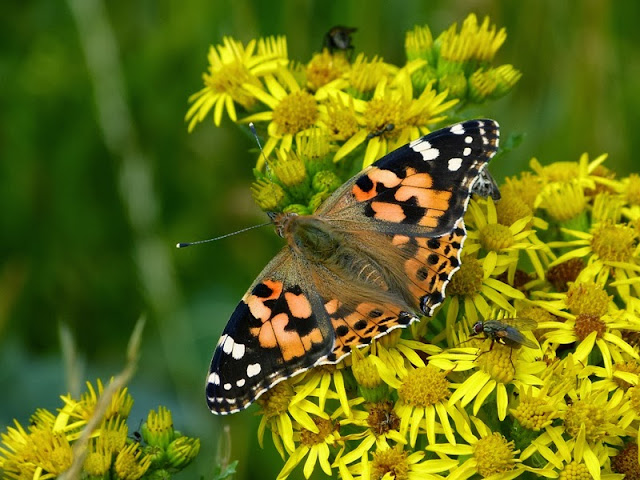
Painted Lady

Green-veined White, Pieris napi
The butterfly season kicked off properly with the first record of a Green-veined White on 26th April. Numbers were a little low, but they were seen regularly up until the middle of June. In July the second generation appeared with a vengeance. It seems that the weather conditions must have been perfect for them this year with numbers peaking around the middle of August.
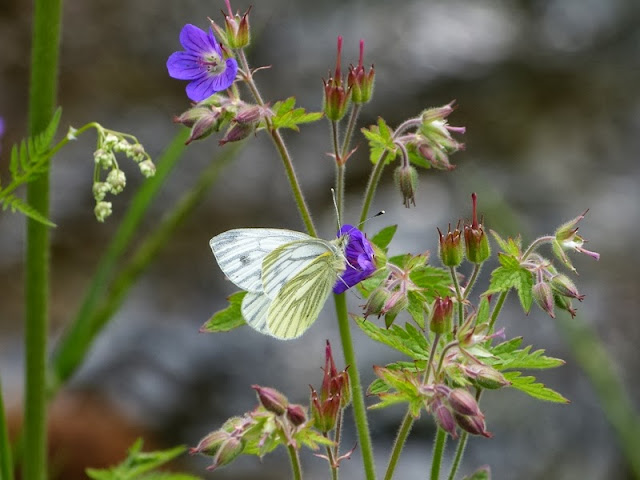
Green-veined White

Small White, Pieris rapae
The first record of a Small White this year was on 29th April, which is more than a month later than last year and two months later than 2011. This just shows how their emergence is related to the weather. Like the Green-veined Whites, their numbers were low for the spring generation, but when the second generation started to appear at the beginning of August they were seen in far greater numbers than they have been for many years.
Small White

Comma, Polygonia c-album
The Comma is a butterfly that isn’t seen in great numbers here. It was first recorded in East Lothian in 2004 and is now seen all over the county, but rarely more than one at a time. The first one recorded here this year was on 30th April and a few records kept trickling in until the end of October. I find it odd that we never see it in greater numbers like the Small Tortoiseshell or Peacock with which it shares a similar life cycle and food plant.
Comma

Orange Tip, Anthocharis cardamines
The first Orange Tip seen this year was on 7th May. Their numbers were lower than average, but considering the rain and flooding we had last year this isn’t surprising. They don’t have a second summer generation like the other whites, but hopefully they should do well next year. Strangely, I didn’t see very many eggs or caterpillars, which are normally fairly easy to spot.
Orange Tip

Large White, Pieris brassicae
The first Large White was seen on 7th May. Generally we don’t see Large Whites in great numbers here, however this year, as with the other species from August onwards we had unusually high numbers of Large Whites. It wasn’t unusual to see more than 40 on a buddleia bush.
Large White

Speckled Wood, Pararge aegeria
Speckled Woods are butterflies that excite me a lot! In 2009 we received our first couple of records of them in East Lothian. The following year I found a small colony of them and since then they have increased in numbers year on year. The first record this year was on 14th May. After that records came in from all over the north and middle of the county. It seems that they first arrived here on the east coast having spread up from the Scottish Borders. This year they have worked their way almost along the entire length of the coast and up the River Tyne valley. It is amazing to see such a rapid spread of this species and next year I won’t be surprised if they are seen all over the county.
Speckled Wood

Holly Blue, Celastrina argiolus
I only received one record of a Holly Blue this year on the 21st May. This was sad after they had been seen in various locations over the previous two years. Hopefully this one sighting means that they are still clinging on at the long-established colony in the west of East Lothian.

Red Admiral, Vanessa atalanta
The first Red Admiral we saw this year was on May 22nd. Thereafter they were seen a few times, but compared with other butterflies this year, they weren't around in great numbers. I think the long winter was too much for any of them to survive and we didn't get very many making their way up from Europe.

Small Copper, Lyceana phlaeas
The weather this year seemed to suit Small Coppers with the first one being recorded on 30th May and thereafter higher than normal numbers being spotted. It was interesting to note that last year the majority of those seen were of the caeruleopunctata aberration, with a number of blue spots on their hind wings. However, this year very few aberrations were noted. It is interesting to speculate whether the aberration is a result of the climate, or quality of the caterpillar food plant, or for some other reason.
Small Copper

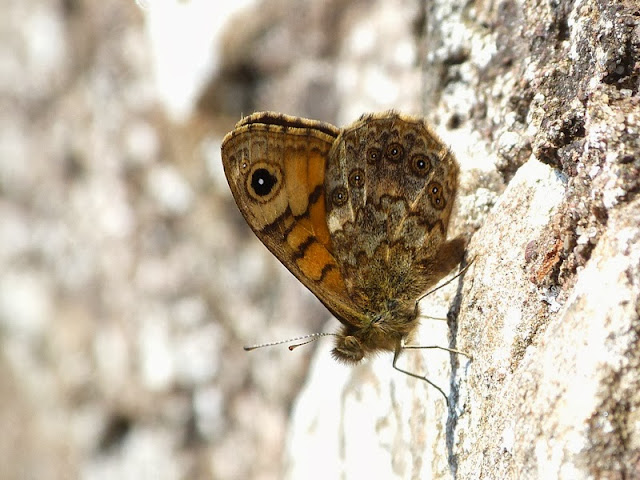
Wall Brown, Lamiommata megera
Like the Speckled Woods, Wall Browns were first recorded in East Lothian only a few years ago, but they don’t seem to have spread as quickly. We had a new record of them on North Berwick Law, so they have spread about half way along the coast in that time. The first record this year was on 30th May. They seem to occur mostly on the coast, but in August I saw one six kilometres inland at Woodhall Dean.
Wall Brown

Small Heath, Coenonympha pamphilus
The first Small Heath was recorded on 2nd June. It is a common butterfly along the coast in East Lothian and it is also found in the Lammermuir Hills. This year they appeared to do as well as ever.
Small Heath

Common Blue, Polyommatus icarus
The common Blue had a fairly normal year. I think that because they have come from eggs that were laid last year, they seem to be affected less by this year's good weather. The first Common Blue was seen on 16th June and they were on the wing until the middle of September.
Common Blue

Ringlet, Aphantopus hyperantus
Ringlets have a very short flight period. They occur in damp grassy areas and normally start to appear in late June, and this year they turned up right on cue on 21st June. The number of Ringlets on my transect this year was lower than normal, but that isn't surprising given that the area was flooded twice last year. At other sites around East Lothian there were good numbers of Ringlets.
Ringlet

Grayling, Hipparchia semele
The Grayling was restricted to a couple of very small sites in East Lothian, with the odd record of them being found at other coastal sites in the past, but these seem to be one-offs. The first Grayling recorded this year was on 25th June at one of the established sites. Last year a new colony was discovered on a re-landscaped mining spoil heap close to one of their other colonies. When I visited this colony in mid July I counted 80 individuals in a short visit, double the number that I saw last year.
Grayling

Meadow Brown, Maniola jurtina
Meadow Browns seemed to do very well this year. The first record was on 25th June and they were seen in good numbers up until the end of August. I only saw one on my transect this year, but again, this isn’t surprising given the flooding we had in that area last year.
Meadow Brown

Dark Green Fritillary, Argynnis aglaja
The Dark Green Fritillary is a lovely bright butterfly that occurs in many coastal areas and valleys in the Lammermuir Hills. The first one was seen in East Lothian this year on 30th June. They never occur in great numbers, and this year proved to be about average for them.
Dark Green Fritillary

Northern Brown Argus, Aricia artaxerxes
I am aware of four colonies of Northern Brown Argus in East Lothian, but I am sure there are probably more in the Lammermuir Hills. The colonies are very small, one being based around a patch of their food plant – the Rockrose, Helianthemum nummularium on a golf course and another on a small patch of Rockrose in a private garden.  I tend to go and specifically look for them where I know they occur and this year they seemed to be a little later than normal, but in reasonable numbers.
Northern Brown Argus

Small Pearl-bordered Fritillary, Boloria selene
Having visited a reserve in the Scottish Borders this year to see Small Pear-bordered Fritillaries, I was delighted to find them at a site just inside East Lothian a couple of weeks later. There have previously been a few unconfirmed sightings of Small Pearl-bordered Fritillaries in East Lothian, but this time I saw them long enough and took some pictures which confirmed their identification. It is funny how seeing a butterfly elsewhere can lead to identifying them in different sites. If I hadn’t seen those in the Scottish Borders I may have dismissed these as Dark Green Fritillaries and not looked any closer!
Small Pearl-bordered Fritillary

Small Skipper, Thymelicus sylvestris
Another very exciting record this year was the discovery of a number of Small Skippers at Aberlady Local Nature Reserve. There had been three isolated sightings of Small Skippers at two locations in East Lothian the previous two years, but on 12th July I received an excited phone call from a local volunteer who had found more than ten of them on a patch of thistles in the reserve.  She went on to find more at the reserve and I then received other records of them at three other locations within three kilometres of this site. It is great to hear that they are doing well and if we have good weather next year I am sure we will find them at various other locations.
Small Skipper

Clouded Yellow, Colias croceus
We only very rarely see Clouded Yellows here. I saw one thirteen years ago and a colleague saw one seven years ago. This year we received two records. The first was seen in North Berwick on 31st July and the following day we were told of one about 25 kilometres further along the coast in Musselburgh. I guess it must have been the same individual. In August and September high numbers arrived in southern England from the continent. They were seen laying eggs and I was hoping that we would be invaded by the next generation. Unfortunately the cold weather proved too much for them and they didn't venture up here!


All together this has been a fantastic year for butterflies. In total I received sightings of 23 different species, which I think must be a record for East Lothian. Only ten years ago eight of those species hadn't been recorded here. It is amazing that so many species continue to expand their range into East Lothian. We seem to be losing more and more habitat, and yet the butterflies seem to be better than ever. I wonder what the next new species will be. I can't wait for next year!

Followers