I am no expert photographer, preferring to capture the moment than get a perfectly composed shot. The pictures on my blog are either taken with a compact Canon, a Panasonic Lumix FZ150 or on my phone.


Showing posts with label Pyronia cecilia. Show all posts

Tuesday, 22 September 2026

Malaga Butterflies July 2026

This summer we returned to Spain for our summer holidays. We have rented a villa near a village about 45 kilometres north west of Malaga every second year since 2012. Traditionally, we have visited the first two weeks of July, although on our previous two visits we went in June for a change!


Although in June the place was a little greener, this July it seemed particularly dry. Initially I thought this may just be me comparing it to June, but over the two weeks we were there I realised that it was drier than normal.

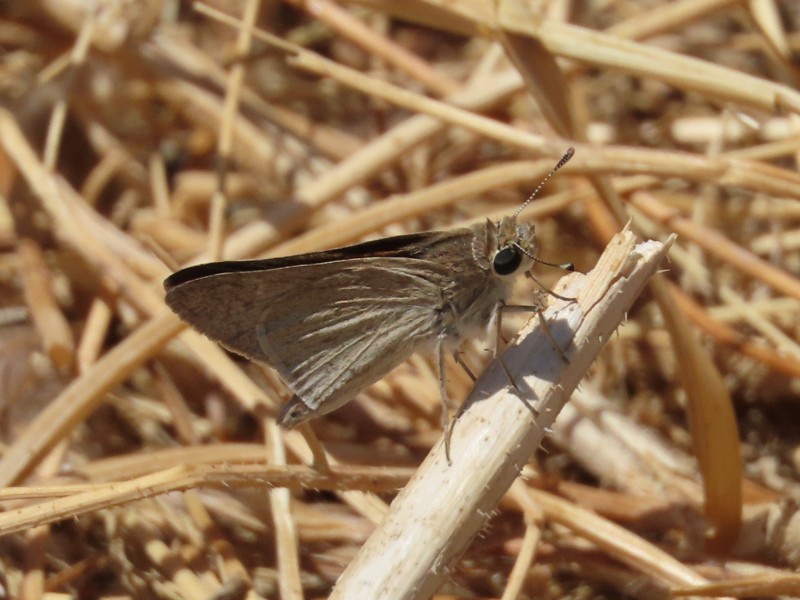
This Sage Skipper, Syrinthus proto, was guarding a spot on the track outside the villa, where I have seen one every year.


Spain had more than normal levels of rainfall over the winter and spring, causing a lot of vegetation growth, but very hot dry weather since had dried it all out. The wildfires seen across Spain were the result of all of the dry vegetation.

In previous years I would see loads of Southern Gatekeepers, Pyronia cecilia, hiding from the sun in shady areas along the track. This year I only chanced upon a couple.


My usual walks up the track close to the villa didn't result in as many butterflies as I normally see there. A few kilometres along the track there is a small, steep hill, where I have seen Swallowtails and Wall Browns in the past. At least this hill didn't disappoint this year. There were a lot of Painted Ladies, Vanessa cardui, flying in an area of Thyme at the base of the hill.


Higher up there were Long-tailed Blues, Lampides boeticus, and Wall Browns, Lasiommata megera, battling for territories.


Even on days sitting around the pool there were very few butterflies flying through the garden, which was quite unusual. A very bedraggled Lang's Short-tailed Blue was rescued from the pool the first day, and we saw a Swallowtail and a couple of Small Whites flying past.

The places where I used to find flowering Thyme and Lavender had much reduced plants with very few flowers. As well as being very warm and dry it was also quite windy, which didn't help.


I was very disappointed to see that some work had recently been done on the river, to ease flooding and erosion problems. The area of Mint and other wild flowers where I used to see so many butterflies had been completely cleared. However, I spied an untouched area on the other side of the river, so drove round to check it out.


I was delighted to find an area of small flowers where there were about ten African Grass Blues, Zizeeria knysna, flying. 


There were also Southern Blues, Polyommatus celina.


Small Coppers, Lycaena phlaeas.


And Southern Brown Argus, Aricia cramera, a nice selection of small butterflies.


My final count of species seen (22) wasn't too much lower than normal, but there was certainly not the quantity of each species that I would normally see. The number of species was boosted by a visit to Antequera, which I will talk about in my next post.

Tuesday, 9 July 2024

Malaga Butterflies June 2024

We have just returned from a lovely holiday to the Malaga region of Spain. We were based in Alora, which is about 45 miles north west of Malaga. This was our sixth visit to the area. For our first four visits we were there in the first two weeks in July, two years ago we were there for the first two weeks in June and this year it was the last two weeks in June. It was interesting to compare what butterflies I saw this time with previous visits.

I normally only see Wall Browns high on the hills, but this year they were also along the track close to the villa.


Of course the weather can make a tremendous difference. This year the locals were concerned that there had been virtually no rain for about a year. Lemons and Oranges that should have been harvested last October/November were still hanging on the trees, because they were not good enough to harvest and the landscape looked very dry with hedges and trees dying because of the lack of water. There had been really heavy downpours in other areas of Spain causing flooding, but this area was particularly dry.


Interestingly, the dry weather didn’t appear to have had an impact on butterfly numbers. There were far more Small Whites flying everywhere than I have previously seen. I was really impressed with the flower beds in the centre of Malaga, which were all planted with either native plants, or plants that attracted bees and butterflies, particularly Small Whites.

Small Whites were by far the most common butterflies on this visit.

Unfortunately my usual walk from the villa we rent has been blocked by a new fence. It was a well-used path up the hill and living in Scotland where we have quite liberal access rights it seemed odd that a landowner could block a path like this.


However, I walked along the local tracks and found some new spots where there were plenty of butterflies.

The top of this unassuming hill proved to be a real hot spot for Swallowtails, Long-tailed Blues and Wall Browns. 

I also visited a few great places for butterflies that I have found on previous visits, including the Sierra Nevada mountains, a track near Antequera and a lovely village called Casarabonela, which always seems much greener and more lush than anywhere else around here. In total I managed to identify 51 species of butterflies this holiday and missed several other fly-by species which didn’t stop to let me see what they were.

It seems amazing that so far the dry weather doesn’t appear to have impacted on butterfly numbers. I am not sure if this will continue to be the case, if they don’t have rain soon, as surely the food plants for many species will be drying up.

The one species that I noticed wasn’t present was the African Grass Blue. They like damp grassy areas and I often see them down by the river. However, this year the grass there was dried up. They also like irrigated grass in parks and towns, but water restrictions mean that such areas are not being watered.


We visited the reservoirs at Guadalhorce, which supply much of the water for Malaga. They are currently at 20% of their capacity and are dramatically lower than they were two years ago when we last visited. This was another place where I have seen African Grass Blues in the past, but despite searching I didn’t find any. This year, though, there were a lot of Southern Blues in the same locations.


A nice surprise was to see Monarch butterflies drifting in and out of the lovely big park in the centre of Benalmadena. I wish I had had more time to go into the park to see what other butterflies there were there.

Having erienced a very wet few months in Scotland I don’t often wish it would rain, but I really hope that southern Spain gets some rain this coming winter to replenish the area. Here are a few of the butterflies I saw in the area.

Bath White.

Several Clouded Yellows were attracted to a clump of thistle-like flowers down by the river.


I used to find Dusky Heaths up the path that has been blocked off. Luckily this year there were some along the edge of the track by the villa.

There were two or three Geranium Bronzes flying around the villa garden and laying eggs on the Geraniums. In Alora each planter
down the main street had three or four Geranium Bronzes on the Aptenia cordifolia - a succulent plant with red flowers.

Long-tailed Blues could be found anywhere where Thyme was growing.

 A small patch of Thyme at the side of the track had Small Whites, Long-tailed Blues and this Lulworth Skipper on it. This was
the only one I saw this holiday.

Meadow Browns tended to hide away from the sun, preferring shade under the scrub.

Mediterranean Skippers were very plentiful. In the past I have only seen one or two in the area.

I only saw one Painted Lady close to the villa.

Sage Skippers were all along the tracks. They tended to fly up when disturbed and whiz around, returning to close to where they
had taken off.

I think I only saw this one Small Copper near the villa.

I love these beautiful Southern Brown Argus.

The Southern Gatekeeper is another butterfly that prefers to stay in the shade. Some years they can be really numerous.
This year there weren't so many.

I was delighted to see a Striped Grayling on the track near the villa. They can be quite common, but I have never seen them there before.

There were a couple of Swallowtails hill-topping on the small hill pictured earlier on in the post.


Wednesday, 21 September 2022

Antequera Butterflies June 2022

Two days before the end of our holiday, on 11th June, I decided to drive up to Antequera to walk along an amazing little track I found in 2019 when we were last in Spain. This track runs along the north side of El Torcal de Antiquera, which is an amazing area of limestone rock. In April 2019 I had seen an amazing variety of spring butterflies and when I returned in September that year there were still a lot of butterflies there, despite the local goat herd having grazed all of the flowers down.


I had great hopes for this year, but noticed as I drove up that the wind was getting stronger and stronger. When I arrived it was incredibly windy, but as I was there it would have been silly not to have gone for a walk. The gusts of wind whipped up sand from the track and bent the vegetation. Despite this, there were still a few hardy butterflies hanging on! They were mostly species I had seen elsewhere on our holiday, such as Bath Whites, Clouded Yellows and Sage Skippers.

There were one or two Spanish Gatekeepers and Southern Gatekeepers sheltering amongst the vegetation.


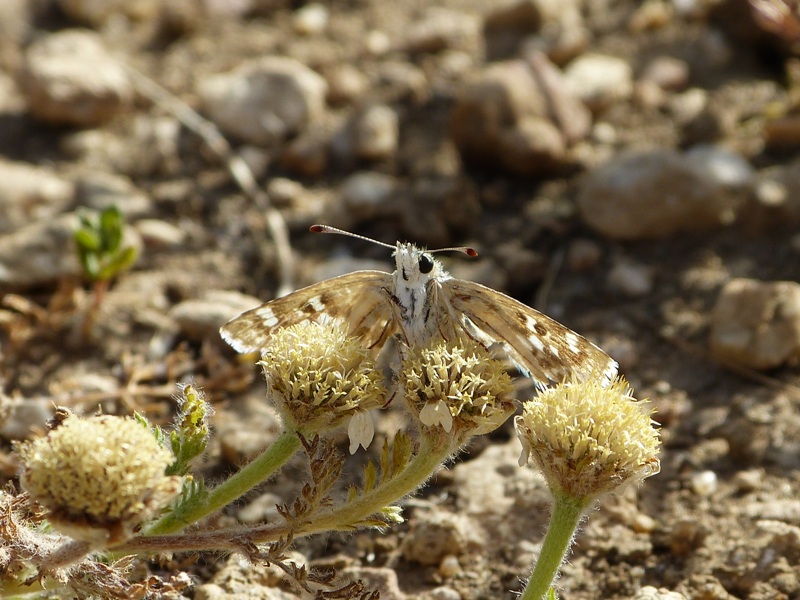
I was really pleased to see an Iberian Marbled White.

There were also Small Whites, Large Whites, Painted Ladies, Meadow Browns and Mallow Skippers. I didn’t want to pursue any of them for pictures, as when they took off they were immediately taken by the wind and I was concerned they would be blown into some scrub and sustain damage.


I was amazed to see a Swallowtail doing some acrobatics, trying to feed on a flower that was blowing violently in the wind.

The last butterfly I saw was a Red-underwing Skipper. Normally I see a lot of these, but this was the only one I saw this holiday.


Despite the wind I saw 15 species. I couldn’t manage a decent picture of any of them, as they were being battered by the wind and so was I! I can only imagine how many more butterflies there would have been had it not been windy.

Saturday, 8 October 2016

Malaga, Spain - Butterflies - July 2016

From the 1st to 15th July this year we had our annual family holiday in a villa 45 kilometres north west of Malaga. This is the third time we have holidayed there, coincidentally being there for exactly the same dates in 2012 and 2014 previously.

The holiday went off to a really good start, with me seeing a Small White, Pieris rapae, as we were driving out of the airport and then a Plain Tiger, Danaus chrysippus, flew across the road in front of us.

There is an area that I tend to walk to each day to look for butterflies just a little way up the road from the villa we rent. Over the previous two years I have learned that this is the best local spot to find them. Probably the most common butterfly there is the Southern Gatekeeper, Pyronia cecilia, although they weren't as numerous as the first year we visited.


Dusky Heaths, Coenonympha dorus, are beautiful little butterflies with the line of silver scales along the edge or their wings. They always seem to be flying around this area.


The track turns into a feint path that climbs along the ridge of the hills through olive groves. On the exposed parts of the path male Wall Browns, Lasiommata megera, take up territory, chasing after any other butterflies or large insect they see.


Common Blues, Polyommatus celina, were the other butterfly that could be relied upon to be there each day. They seem very much smaller than those that I see back home. I wasn't sure if I was just imagining this, but I also remember when I saw a Small Copper, Lycaena phlaeas, how much bigger it looked than the Common Blue. The two species are more-or-less the same size back home.


I only saw a Small Copper once this year. It seems to be a very widely distributed butterfly, but it's never seen in great numbers.


I was delighted to see a Striped Grayling, Pseudotergumia fidia, on the first day I walked up the path. It was there again in exactly the same place the second day too, but I didn't see it after that. Two years earlier I saw a lot of them in the next valley, but have never seen them at this spot before.


Mallow Skippers, Carcharodus alceae, seemed to have small territories along the road to the villa chasing after anything that flew anywhere near them.


Up the track, on the wild Thyme, Sage Skippers, Syrinthus proto, were doing the same thing.


On a couple of occasions I saw a Mediterranean Skipper, Gegenes nostrodamus. I saw this species very briefly for the first time two years ago.


Other butterflies that I saw occasionally were Clouded Yellow, Colias crocea,
... and Bath White, Pontia daplidice.


The Southern Brown Argus, Aricia cramera, is a beautiful little butterfly, which I regularly saw flying among the wild flowers.


I'll continue with the other butterflies I saw in my next post.

Followers