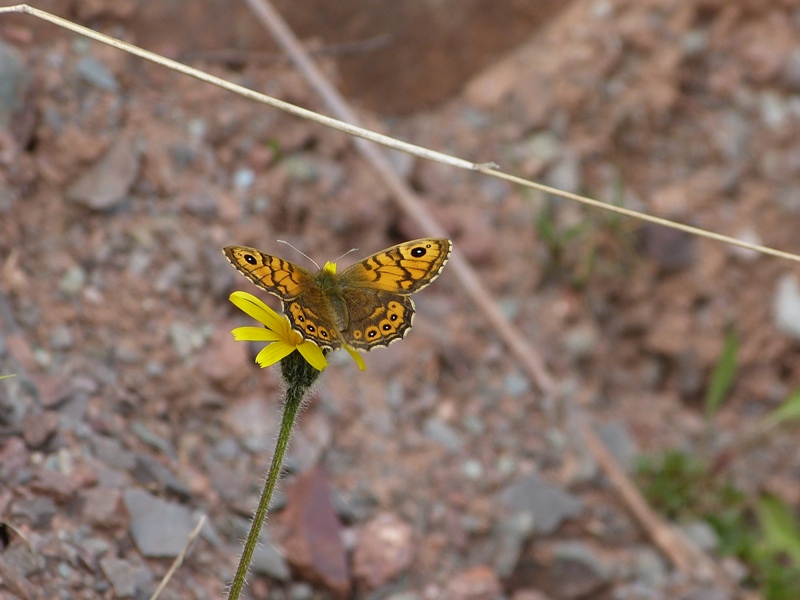
Small Heath numbers were down on their average and this year was the lowest count since I have been collating the records.

Other species that didn't do so well were Meadow Browns. We only saw about two thirds of the normal numbers.

And Ringlets were the same, although it was notable that some sites did better than others.

Dark Green Fritillary numbers were a little lower than average.

We recorded 41 Large Skippers in East Lothian in 2025. I am sure this must be the best year they have had here, but because we normally see so few I haven't added them to my spreadsheet. I'll sort that over the winter!

Small Skippers had a better year than average, although they have only been seen in East Lothian since 2011. Their numbers peaked in 2021 and have fluctuated since then.

Common Blues did a little better than average.

So, it seems as though many of the grassland species didn’t do so well in 2025. Could this be because they also tend to emerge later in the summer, by which time the vegetation had become very dry? This may have resulted in their caterpillars perishing. However, by the time the vegetation dried out the caterpillars would have been fairly well developed and forming chrysalises.
Could it be because of the easterly winds that hit most of the coastal sites? Many of our best grasslands are on coastal sites.
Of course, it maybe isn’t as simple as that, because the butterflies we saw in 2025 would have been laid as eggs the previous year, when the weather was less favourable.
There were quite a number of other species seen, but they tend to be found in more remote sites, so were only recorded in small numbers. These included Purple Hairstreak, Small Pearl-bordered Fritillary, Grayling, Northern Brown Argus and Green Hairstreak.

There was great excitement when a Clouded Yellow was spotted at John Muir Country Park in August. Another was seen at Skateraw a couple of weeks later. A good number of them migrated over from the continent in 2025 and there were records from all over the UK.

So, on the whole, 2025 turned out to be a fantastic year for butterflies. Between the ad hoc records and the transects we recorded a grand total of 17,229 butterflies.
One thing I always wonder is if we have great weather are there really more butterflies, or are people out and about more and therefore seeing more butterflies!
To round the year off I received reports of three different Peacocks being spotted in coastal towns in the middle of December. This means that for the first time I can remember we had butterflies recorded in every month of the year! Maybe a sign of climate change?