A collection of observations about butterflies here in Scotland and notes of the butterflies I have seen when on family holidays.
Monday, 9 February 2026
East Lothian Butterflies 2025 part 2
Tuesday, 30 January 2024
East Lothian Butterflies 2023 Part 2
Continuing on from my previous post..
The first Small Heath was seen on the 17th May. They weren't seen in high numbers in 2023, possibly because not as many people were recording along the coast where they are most commonly seen. Apparently, there are two generations a year, but it is difficult to separate the generations because they overlap and vary according to each site along the coast and in the hills.
2023 could
certainly not be described as a Painted Lady year. I only received 46 records
and it was the first year, since I started recording butterflies in the 1990s
that I didn't see one myself. The first record received was on 29th May and the
maximum number seen in a week was 8 in August, indicating that they had managed
to breed. It is interesting that the other migratory butterfly, the Red
Admiral, did so well, but not so the Painted Lady.
The
first Meadow Brown was recorded on the 4th June. They had the best year since I
have been collating the butterfly records with 2565 butterflies recorded.
Almost every year they are our most numerous butterfly recorded.
In
contrast, the Common Blue had its worst year since I have been collating the
records! The first record was on the 12th June and I only received records of
252 butterflies, with the average number over the previous ten years being 465.
Ringlets
were another species that had a poor year. In fact the worst year in the last
ten years, not counting 2020, when we were in lockdown. The first record was on
the 15th June and initially they seemed to do well, but just didn't peak in
July as they normally would.
The Dark
Green Fritillary also didn't do well in 2023 with the number of records being
about a third of what we would normally expect. The first record was on the 18th
June. The caterpillars feed on various species of Violets. I wonder if these
plants didn't do well the previous summer with the dry weather we experienced.
I saw
five Small Pearl-bordered Fritillaries when I was looking for Northern Brown
Argus. They were the only records that I am aware of this year. It is a rare
butterfly in East Lothian, which has only been recorded from a couple of sites.
The
final species to be recorded in 2023 was the Grayling on 3rd July. There is a
well-established colony on the pyramid at Meadowmill. I am aware of them being
seen in an east Lammermuir Dean and I hear that they are often seen at the old
power station site at Cockenzie. This year there was one seen at Levenhall,
which is very exciting. Maybe our re-location project is going to be a success
after all!
Sadly,
there were no Brimstones seen in East Lothian in 2023, having had a few records
in 2021 and 2022. We normally rely on the odd migrant flying in and I suspect
that until we have more food plants available for them, they will not be able
to maintain a presence in East Lothian.
I
didn't receive any records of the Green Hairstreak in 2023. They are known to
occur in a few remote locations in East Lothian, so we rarely get records of
them. I saw some just over the border at Soutra, where they appeared to be
doing well, so hopefully they are doing as well in their colonies in East
Lothian.
Similarly,
the recently discovered Purple Hairstreak occurs in a few small colonies in
East Lothian. I didn't receive any records in 2023, but I am sure they would
still have been at their covert colonies in the eastern Lammermuirs
Saturday, 27 August 2022
Sierra Nevada continued
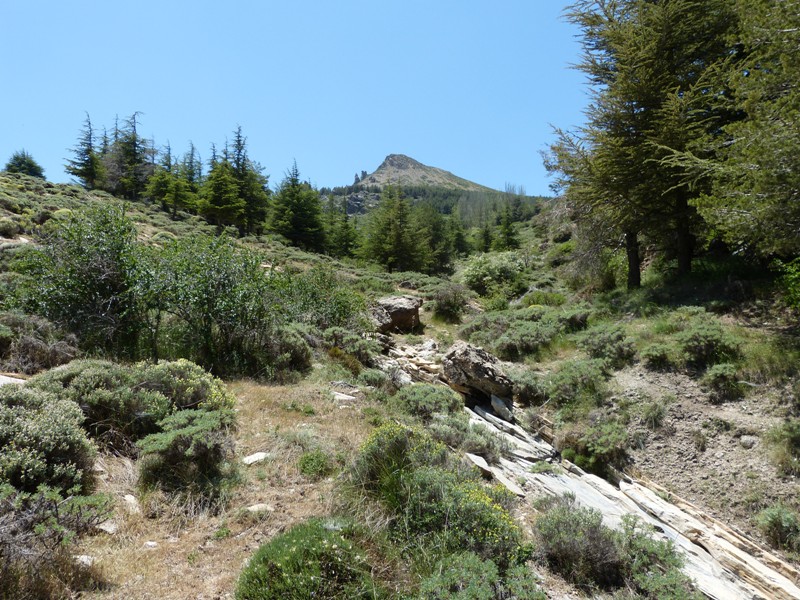
There is a meadow is just off the road at about 2,000 metres above sea level that I always visit when I go to the Sierra Nevada. It has a little stream running through it, which I expect is quite ferocious during the snow melt, but is mostly dry in the summer months. It is such an amazing spot, as there are so many butterflies in quite a small area. Again, the butterflies I saw this June were quite different from what I am used to seeing in July. There were far fewer, but they were lovely nonetheless.
Almost immediately a beautiful Knapweed Fritillary landed on a shrub in front of me. I think there must have been about ten of them in this area.
A few Iberian Scarce Swallowtails kept flying across the meadow and there must have been more than 40 Clouded Yellows.
All along the dried up stream bed there were little Lorquin’s Blues.
Despite their size they were quite aggressive, chasing off any other butterflies that dared to land too close! Here is one about to attack a Common Blue!
I normally see a lot of Marsh Fritillaries at this spot, but this year I only saw one. I also saw eight or ten Small Heaths. These had me a bit confused at first as some of them appeared to have some metallic scales on their wings.
The Queen of Spain Fritillaries here were a lot fresher than those higher up the mountains.
I was pleased to see some Common Blues, Polyommatus icarus, here. In most of Southern Spain they are replaced by the identical-looking Southern Blue, Polyommatus celina, but the Common Blue occurs in the Sierra Nevada, having been left behind as the climate warmed after the last Ice Age.
I spotted another little butterfly that I was surprised to see. It was a Green Hairstreak. I think I saw three different individuals. I have never seen these in the Sierra Nevada before and expected that they would occur earlier in the year.
Making up the numbers were Small Whites, Painted Ladies and Meadow Browns.
There were some Western Dappled Whites amongst them.
I also saw a Southern Marbled Skipper.
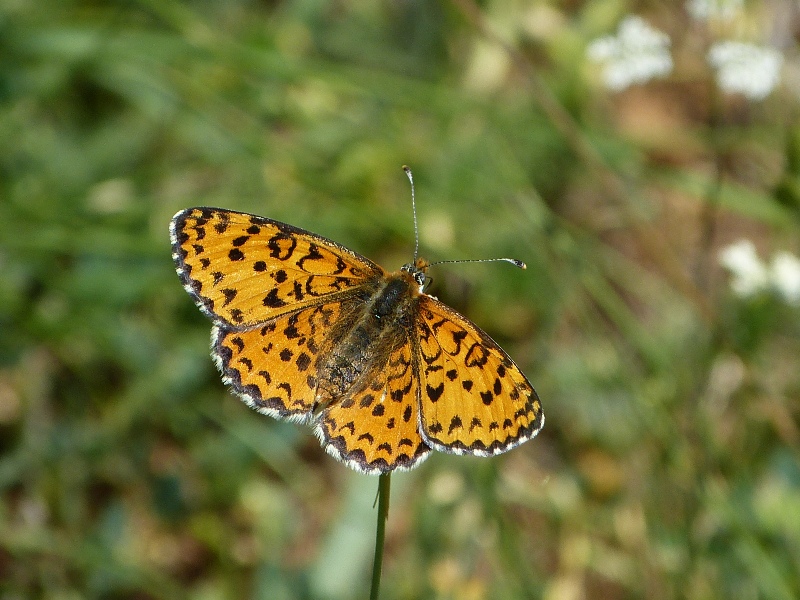
And I had a lovely view of what I thought was a Spotted Fritillary. It wasn’t until I checked my pictures back home that I realised it was a Lesser Spotted Fritillary, Melitaea trivia, – a species I hadn’t seen before.
On each of my three previous visits to the Sierra Nevada, always in July, I have seen over 40 species of butterflies. This year, with it being earlier in the year I saw 23 species. I didn’t feel disappointed in the slightest. It would have been nice to have seen some of the rarer species higher up the mountains, but this delightful meadow was so lovely and it made up for the lack of variety I had seen earlier in the day.