I am no expert photographer, preferring to capture the moment than get a perfectly composed shot. The pictures on my blog are either taken with a compact Canon, a Panasonic Lumix FZ150 or on my phone.


Sunday, 29 March 2020

East Lothian Butterflies 2019 Part 2


Continuing on from my previous post ...


Small Copper, Lycaena phlaeas
The Small Copper started the year very well. The first one was recorded on 17th April and two more were seen the following day. The first generation did very well and the second generation started earlier than normal and was seen in good numbers until the middle of August, when numbers crashed. It seems that the periods of heavy rain knocked numbers down. The last Small Copper was recorded on 20th September, six weeks earlier than last year.


Wall Brown, Lasiommata megera
As with many other species in 2019 the Wall Brown appeared early and the spring generation was larger than we would normally expect. Although the summer generation was larger than the spring generation, it was closer to the average number that we have seen over the last few years.


Holly Blue, Celastrina argiolus
The most exciting news of the year was the discovery of a colony of Holly Blues in Gullane. Every year for the last ten years we have had one or two records of Holly Blues. There had been a colony at Newhailes for a number of years, but I don't think they have been seen there since 2013. The other records had all been in the Gullane to North Berwick area and I always thought there must be a colony hidden in a large garden somewhere in the area. On 20th April a Holly Blue was seen near the coast in Gullane and despite careful searching of the area is wasn't seen again. However, on 3rd August another record came in from outside a garden in the village. Over the next few days several other records from the same area were reported with up to seven individuals being seen there. Nine days later another small colony was found in Gullane about 700 metres away. The last record received was from Archerfield about one and a half kilometres away.
All of these records were from quite public areas, so I doubt they are the location of the original mystery colony. It will be really interesting to see how things develop over the next few years.


Green Hairstreak, Callophrys rubi
The Green Hairstreak is found in a few remote colonies around East Lothian, mostly in the Lammermuir Hills. Because of this we don't get many records. The most easily reached site where they are found is Saltoun Wood, but this colony has suffered a serious decline. There had been a fire there early last year and this year we only recorded three individuals in that area. The three records we received were on 30th April, 15th May and 9th June.


Small Heath, Coenonympha pamphilus
2019 was a good year for Small Heaths. It was notable hat they did particularly well in the summer generation. The first record was on 10th May and they were seen through to the 7th September.


Common Blue, Polyommatus icarus
Common Blue did very well in 2019. The first record was on 24th May and I received almost double the normal number of records. As has been noted with other species, it is the year after a good season that the number of butterflies increases.


Meadow Brown, Maniola jurtina
Meadow Browns also did very well in 2019. I was surprised that we didn’t see more in 2018 when we had such good weather, but I realise that the number we see reflects the weather of the previous year. The first record in 2019 was on 18th June. They had quite a short season, but were seen in greater numbers than in the previous six years.


Ringlet, Aphantpopus hyperantus
The number of Ringlets recorded in 2019 was about average, but they were condensed into a shorter season than normal. The first record was on 18th June and they were initially slow to build up their numbers. However, they peaked in the middle of July and then quickly dropped away, with the last record being on the 15th August.


Small Skipper, Thymelicus sylvestris
The Small Skipper has been increasing in number year on year, since it was first discovered in East Lothian in 2011. The trend continued in 2019 when we received records of 677 skippers, an increase of over 50% on the previous year. The first record was on 22nd June and they were seen in great numbers in July. They are also continuing to extend their range in East Lothian.


Dark Green Fritillary, Argynnis aglaja
Dark Green Fritillaries had an amazing year in 2019 with almost twice the normal number being seen. The first record was on 23rd June and they were recorded until 10th August. Dark Green Fritillaries are mostly found on coastal sites in East Lothian but can also be found in one or two remote valleys in the Lammermuir Hills.


Grayling, Hypparchia semele
Grayling are found in three locations in East Lothian. One of these is very remote cleugh in the Lammermuirs and I didn't receive any records from there this year. The other two sites are at Blindwells and Meadowmill. The Blindwells site is about to be lost to a large housing development, but thankfully the contractors have fenced off the area where the Grayling are found. However, this remains a very small area surrounded by earth moving equipment. Amazingly, on the only occasion anyone was able to visit there, they recorded 13 Graylings flying. A few hundred yards away at Meadowmill Graylings were recorded in much greater numbers than in previous years. The first record was on 26th June and records of over 400 Graylings were received.


Northern Brown Argus, Aricia artaxeres
Northern Brown Argus are only known to exist in four small colonies in East Lothian. They are all quite remote and isolated, so take a bit of dedication to get to. Because of this I only received one record of a Northern Brown Argus on the 20th July. I know they did very well in the Scottish Borders and I have no reason to believe that they wouldn't have done well here, too.


I didn't receive any records for Large Skippers in 2019, but I think they will still be out there along the foothills of the Lammermuirs. Neither did I receive any records of Small Pearl Bordered Fritillaries. They are only known from a couple of sites in East Lothian and we never get records of more than one or two in a good year! Given the prolonged period of great weather earlier in the summer I was surprised that we didn't receive any records of Clouded Yellows or any other unusual migrants.

Once again, I want to send a big thank you to everyone who sent in their records to me last year. The combined efforts of everyone creates a very good picture of how butterflies are doing in East Lothian.

Saturday, 21 March 2020

East Lothian Butterflies 2019 Part 1


There was a very clear correlation between the weather and number of butterflies seen in East Lothian in 2019. After a reasonably mild winter there was an unseasonably warm week at the end of February with temperatures reaching 16 degrees. Then it was cold again until the end of March. At the end of April we experienced an even warmer week with temperatures of 26 degrees. However, we still experienced a few hard frosts in May. The remainder of the year was quite reasonable, but it was interspersed with very heavy rain showers. The butterfly season ended abruptly at the end of October when the weather turned cool and wet.

Other than a couple of hardy Peacocks that appeared in January, the warm week in February brought out a flurry of species. We had seen seven species before the end of February, which must be a record for East Lothian. Things then went very quiet until the third week in March when the butterfly season truly started. Most species did very well in 2019, probably as a result of the very good weather in 2018 allowing the early stages of the butterflies to survive in good numbers. However, from July through to September there were occasional very heavy periods of rain which had a dramatic impact on butterfly numbers.

Despite having fewer people recording butterflies than the last few years we had a record 20,598 butterflies recorded in 2019 (16,875 in 2018). This was helped considerably by the enormous number of Painted Ladies that arrived on our shores in June and July, but even without them we had almost as many butterflies as in 2018.


Peacock, Aglais io
The first butterfly recorded in East Lothian in 2019 was a Peacock seen at Aberlady Local Nature Reserve on 11th January. A second Peacock was seen at Levenhall Links three days later. Peacocks have been recorded in increasingly high numbers over the last seven years, with 2019 being the best year yet. Numbers peaked in mid August, but then dropped very quickly again to single figures by the start of September.


Small Tortoiseshell, Aglais urticae
The Small Tortoiseshells waited until the warm week in February to show, with the first record being on the 17th. They have been declining in numbers over the last few years. However, 2019 saw a bit of a revival in numbers when the new generation emerged towards the end of July. As usual, they quickly disappeared with many of them heading into hibernation surprisingly early in the season.


Comma, Polygonia c-album
The number of records of Commas has gradually been increasing since they were first recorded in East Lothian in 2001. However, they declined significantly 2016 presumably as a result of the lousy summer. Since then they have been picking up and in 2019 the recovery continued. The first Comma was seen on 25th February and, like the Small Tortoiseshell, their number peaked for a week at the end of August and then very quickly they disappeared. It will be interesting to see how many return next spring after their hibernation.


Painted Lady, Vanessa cardui
The big story of 2019 was the arrival on our shores of an enormous number of Painted Ladies. These came in two waves. The first at the beginning of June when we were amazed at the number of Painted Ladies being seen. But that was nothing compared with the number that arrived at the end of July when they were seen in their hundreds. Some of these would have been the young of the previous arrivals, but most of them were seen flying in from the sea. They were also noted flying in a very
definite westerly direction and records were received from all over Scotland including the Outer Hebrides.
I was interested to learn that Painted Ladies had done similarly well in the USA in 2019. So, on both sides of the Atlantic conditions must have been just right throughout the lives of four or five generations of butterflies.
I received records of 5395 Painted Ladies in 2019, a big difference from an average of about 80 over the last six years.


Speckled Wood, Pararge aegeria
The exceptionally mild week in February also brought about a remarkably early record for the Speckled Wood. In fact two were seen on February 26th basking in the sun on the coast at Prestonpans. There was another record on 22nd March. We normally wouldn't expect to see a Speckled Wood here until the middle of April, which is when we started to see them again in 2019. I can only imagine that the three early records were individuals that had benefited from the long summer of 2018 and had formed chrysalises late in the autumn.
The spring populations appeared in higher numbers than in previous years and I was expecting to see bumper numbers later in the summer. However, the heavy rains that we experienced appeared to knock Speckled Woods quite hard.
There were fewer Speckled Woods recorded in 2019 than in the previous year, but they are still doing well in East Lothian.

Small White, Pieris rapae
After such a great year for Small Whites in 2018 I was expecting to see great things in 2019. And it was a good year, but just not as good a year as last year! In 2018 we had records of almost 3500 Small Whites, but in 2019 we recorded 950. However, this is still good when compared with the average for the previous five years of about 360.
The first Small White seen in 2019 was on the 27th February. A good five or six weeks earlier than we would normally expect. The rest of the season was much as expected with a summer population about five times as great as the spring population.


Red Admiral, Vanessa atalanta
The first Red Admiral record of 2019 was on 27th February. This was most likely an individual that had survived the mild winter. There were a few more records in March and April, but it was the first week of June when they started to arrive on our coasts, about three days ahead of the first wave of Painted Ladies. There was another spike in numbers at the end of August, which could have been the next generation. Red Admirals continued to be seen in good numbers until the end of October.


Orange Tip, Anthocharis cardamines
Orange Tips did very well again in 2019. This was probably a result of the great year they had in 2018. They were fortunate that their flight period was before the heavy showers started, so the weather was kind to them.
The first Orange Tip of 2019 was seen on 31st March, about a week earlier than normal.


Green-veined White, Pieris napi
The first Green-veined White was also seen on 31st March. The spring population was a lot larger than average, with the summer generation just being a little more than normal.


Large White, Pieris brassicae
The Large White has never been as numerous as the Small White or Green-veined White. 2019 was a fairly average year for them, which is a little surprising considering how well they did in 2018. The first record was on 11th April and they were recorded through to the 28th September.

I'll continue with the rest of the butterflies seen in 2019 in my next post.

Saturday, 29 February 2020

Zullich's Blue, Agriades zullichi


There is much talk about climate change these days (about time!) and there is no better example of how this will impact on biodiversity than the Zullich’s Blue, Agriades zullichi.

This lovely little butterfly is endemic to the Sierra Nevada mountains in southern Spain. It only occurs in 39 small colonies in a zone between 2,500 and 3,000 metres in altitude.


The food plant of the caterpillars is Androsace vitaliana, a small clump-forming plant, only about 2cm high, which grows on exposed slopes in the Alps, Pyrenees and the Sierra Nevada. It grows in the same altitude range as the Zullich’s Blue.


It tends to grow in very fragile habitats of rocky scree with very little vegetation cover. These areas are vulnerable to landslides, trampling by cattle and most worryingly climate change.


When I first went in search of Zullich’s Blue in 2016, I was amazed to see butterflies surviving in such windswept and exposed locations

The butterfly is only about 20 to 25 mm across its wings and is well camouflaged. I love the subtle brown, grey and blue markings, but this does make them very difficult to spot! They only fly in late June and July.


Average temperature in the Sierra Nevada has increased by 2° in the last 30 years and it is projected to increase by a further 5 degrees in the next century. Snow is now melting earlier in the season, leaving the sloped more exposed to wind and resulting in the ground drying out.

This is a problem for the vegetation, which really needs to move up the mountains to a cooler environment in order to survive. Unfortunately, the dispersal of the seeds doesn't allow the plant to spread far each season.


Similarly the timing of the emergence of the butterfly is critical. If the temperature is warmer than normal, the butterflies may emerge too early in the season to find flowers to feed on, or they could be laying eggs on desiccated plants.

In order to adapt to the changing climate populations of butterflies will be displaced upwards. Even if the food plant could spread uphill in time to keep up, mountains get smaller the higher up you go. Therefore there will be less suitable habitats available for this already rare butterfly.

Thankfully, there is a lot of research going on in the Sierra Nevada about climate change and its impacts on biodiversity. It is hoped that this will increase our understanding of how climate change will effect species elsewhere and what can be done to help species adapt.


I really hope that something can be done to help protect this special little butterfly.

Saturday, 7 September 2019

Tree

During my regular morning and evening dog walk, I usually go up a farm track close to where we live. There is a rather overgrown hedge there and two lovely old Ash trees.
It almost always strikes me, each time I walk under the trees, how they impact on the local environment. Obviously, if it is raining, then they shelter the track from the worst of the rain and when the wind is blowing they give shelter from the wind. But I have also noticed that when the rest of the track is muddy the trees appear to have absorbed the water, or improved the drainage around them and that section of the track isn't muddy. 

Similarly in the summer when the rest of the track is dry and dusty, the areas under the trees remains slightly damp.

On hot sunny days the air is noticeably cooler under the trees and I have noticed on frosty mornings that the ground under the trees often remains unfrozen, even though there are no leaves on the trees then.

I have since noticed a very similar pattern in the woodland where we now live. There is an area of Pine woodland that I walk the dogs through in the mornings. It is quite sparsely covered in trees, but as soon as I walk from this area to the neighbouring grassy area there is a very noticeable difference. In the summer, it is cooler under the trees, but in the winter it is milder, yet there can be frost on the grass.  

The trees appear to act as air conditioning units protecting the ground below them from extremes of weather.
I have long been an admirer of trees. I find it difficult to understand how they can support the enormous weight of their limbs. Their forms are so beautiful and they not only provide the oxygen we need to survive, but they provide homes for so many birds and invertebrates. There is so much more that we are learning about trees and their ability to communicate with each other.

For the last twenty years we have lived in a house with all our heating and hot water provided by long-burning stoves. And I love working with wood, admiring the different grains and forms.

However, it is the impact that these two trees have on their immediate environment that really impresses me. That makes what has been happening to the Amazon rain forest even more concerning. If two trees can make such a difference, what will the impacts be of the loss of thousands of acres of rain forest?

Sunday, 4 August 2019

Comma, Polygonia c-album

On 26th April, while I was watching other butterflies, a Comma landed on a nettle next to me and laid an egg. I marked the spot, so that I could watch the progress of the egg.


Three weeks later, I noticed that I could see the form of the caterpillar inside the egg, so I thought I should pick the nettle stem and keep it in a container, so that I could keep a closer eye on it.

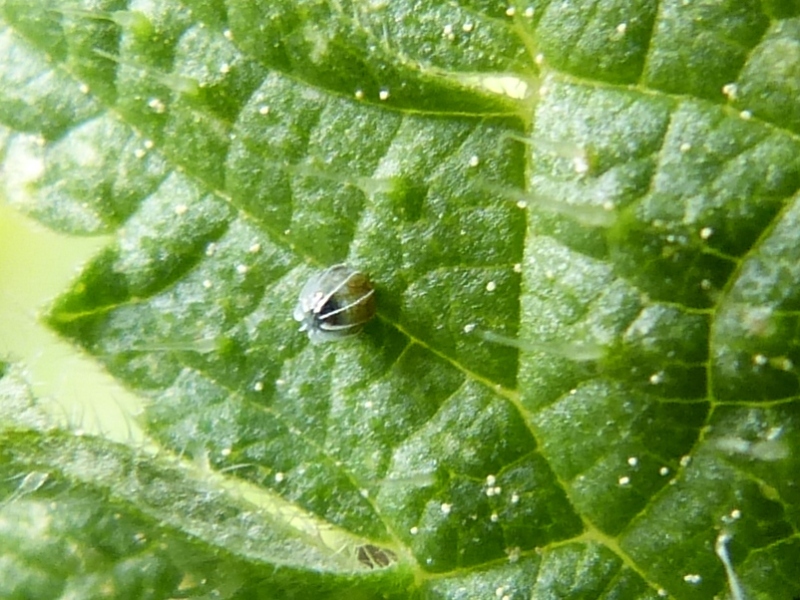
Two days later there was just a little ring where the egg had been. The caterpillar had hatched and eaten its egg shell. I looked under the leaf and there was a little caterpillar, less than 2mm long. I decided to call him Colin the Comma!

I watched the caterpillar grow and change over the next few days.


Sadly, on 11 June I found it lying on the soil in the pot of nettles it had been living on. After careful inspection of the nettles I found a spider on the same leaf that the caterpillar had been living.

I spent hours searching through the nettles at our house close to where I had found Colin and eventually found another Comma caterpillar. This one was smaller than Colin and I think about 4 weeks younger than him. Therefore, I doubt it was a sibling. In the name of equality, I called this one Colette!

On 11 July she was about the same size as Colin had been.

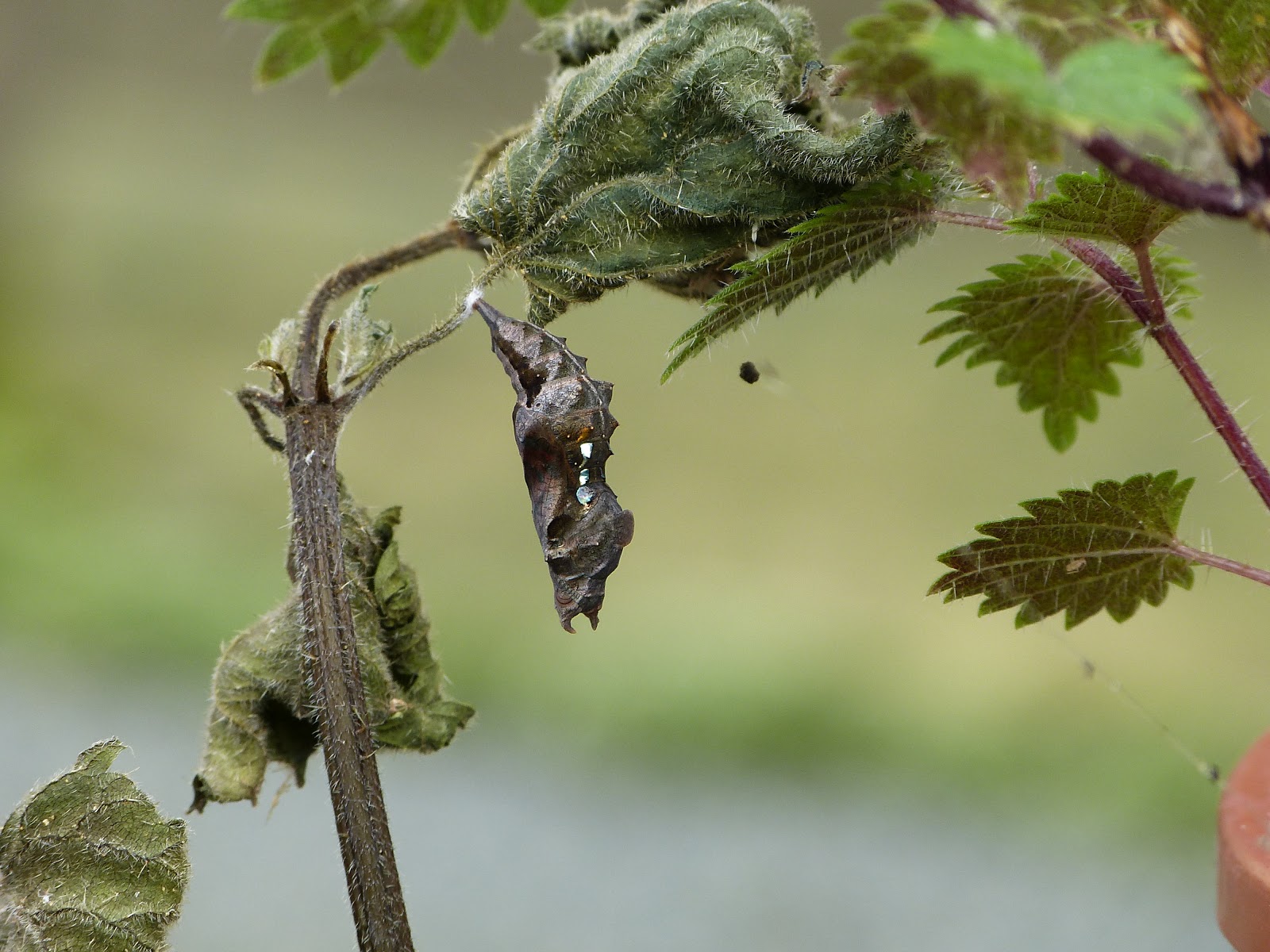
And on 22nd July she turned into a chrysalis. The chrysalis was a beautiful coffee and cream colour scheme, with some amazing shiny silver marks.

On 1st August the chrysalis darkened and started to show the wing markings.

The following afternoon, when I returned home from work there was a Comma butterfly roosting on the side of the net cage. I carefully carried the cage out of the garage and switched on my camera. I slowly unzipped the lid and Colette flew up and out of the narrow gap and away. So, sadly, no picture and no confirmation of whether she was a he or a she!

The egg stage lasted 23 days, the caterpillar 32 days and the chrysalis 12 days. Hopefully, the adult butterfly will hibernate through the winter and be providing a new generation next spring.

Monday, 3 June 2019

Antequera, Spain Butterflies - April 2019


On Monday 29th April I went on my planned trip to El Torcal de Antequera. This is an area of amazing limestone formations and the pictures I had seen of the Natural Park looked very promising, with valleys of wild flowers and weathered rock formations. I decided to leave early as the forecast promised sun in the morning, until about 11am and then it was to cloud over before rain later in the afternoon.

Before any such visit I normally spend some time looking at Google Earth and Streetview to see if I can spot any promising locations. My first planned destination was on the south side of the mountains, but when I arrived at the track I was intending to walk along it was completely cloudy, 9 degrees and there was a strong wind blowing. There was some blue sky around, so I decided to press on regardless. I was very pleased to have a cheap fleece top, that we had each bought on arrival in the village! As I walked, I grew more frustrated at the weather. I thought that even if the sun did come out, the cold wind would still mean that butterflies were unlikely to fly. After a while, it dawned on me that the clouds were being formed over the mountains and just sitting there. As one area of clouds blew away more rolled in behind. I therefore decided to give up on this site, thinking that maybe I could try again in the afternoon when the sun would have swung round away from the mountains.


So I drove to the El Torcal Natural Park. My intention had been to park at the bottom of the entrance road and then walk up to the visitor centre, but the weather was so miserable that I just drove up to the main car park, which was surprisingly busy. Everyone else was dressed as if they were going on an arctic expedition and I felt quite self conscious in my thin fleece. It was 7 degrees up at the car park, still cloudy and windy.


I decided to walk the Yellow Route, which promised panoramic views and I noticed that there appeared to be more sun on the north side of the mountains. So, after my 2.5 kilometre loop of very interesting rock formations, mostly dotted with people climbing up them, I jumped back in the car and drove around to the north. It did appear that the mountains were holding the clouds, and as I rounded a corner the sun came out.

I stopped at a likely looking area, and started to follow a track that appeared to head west, parallel with the mountains. It was interesting to see that there was a fence running next to the path and goats were grazing the lower slopes of the mountain. Luckily they were not on my side of the fence and I was treated to a fantastic display of wild flowers. Initially, not many butterflies, though.


The track turned a corner that then went through some fields of wheat. I was beginning to wonder if this wasn't going to be such a good spot, after all, but I saw a distant white butterfly so decided to continue. I caught up with it and saw that it was a Small White, Pieris rapae. At least it meant that it was warm enough for butterflies, though.


The track then went back into another lovely area of wild flowers and scrub and I was delighted to see a Spanish Marbled White, Melanargia ines, which I watched for some time.


It wasn't until I had returned to Scotland, and I was looking at my photographs, that I discovered that I had also taken pictures of a Western Marbled White, Melanargia occitanica. It has subtly different markings on its wings.


A couple of Clouded Yellows, Colias crocea, and more Small Whites appeared in this section.


Continuing further along the track the vegetation became shorter and then it followed the edge of some arable fields. When the track joined another track I decided that I really needed to turn around in order to get back to my wife when I said I would.

I followed a little butterfly and saw that it was a Small Heath, Coenonympha pamphilus, then this Dappled White, which I am still not 100% sure if it is Western or Portuguese.


The Small Whites and Clouded Yellows were out in force now and I saw the occasional unidentified white or blue butterfly. The sun kindly went behind a cloud for a while, which was enough for one of the smaller whites to stop flying. It turned out to be a Green-striped White, Euchloe belemia, - one of my favourites.


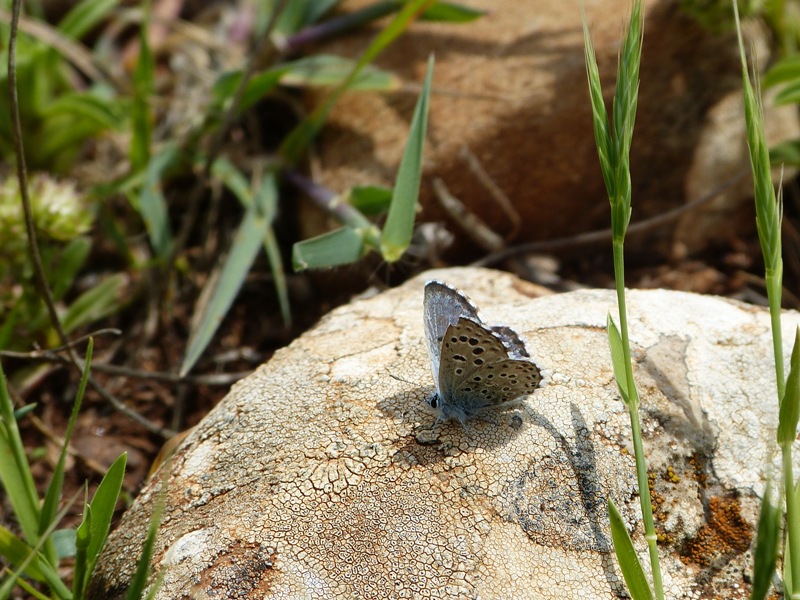
I was now off-piste, so I looped back to join the track, spotting a small blue butterfly in the process. After much following, it stopped for long enough for a picture and an ID of Southern Blue, Polyommatus celina.


I was now very off-piste and struggling to locate the track. As I pushed through some Lavender bushes a small insect flew away, which, when it landed I saw was a little blue butterfly - Panoptes Blue, Pseudophilotes panoptes. I found myself saying, "Oh yes, brilliant!" out loud and then hoped there was no one anywhere near!


The first I saw was a male and then it magically turned into a female as I tried to follow this diminutive little butterfly. They were both very obliging, staying in one spot for long enough for me to manage to photograph them. This was the first time I have ever seen this species and it is a butterfly that I have long wanted to see.


What a difference from a few hours ago when I was cursing the weather! I managed to relocate the track and started to walk back towards the car. However, it was as if someone had switched on the butterfly switch and they were everywhere. Mostly more Small Whites, Clouded Yellows and Spanish Marbled Whites. But then the occasional blue, some Black-eyed Blues, Glaucopsyche melanops.


And then another really small blue, which turned out to Lorquin's Blue, Cupido lorquinii.


As I was photographing them I thought that I saw a couple of large moths flying nearby, but they turned out to be quite faded Spanish Festoons, Zerynthia rumina!


I dragged myself away from this magical spot and back through the wheat fields towards the car, only to discover that the area of short vegetation around the car was attractive to more Panoptes Blues. I saw at least six there, along with some Small Coppers and Southern Brown Argus, Aricia cramera.


I returned to the apartment feeling very satisfied with my day out looking for butterflies. When I arrived back in Alora, I parked in the main car park and walked past a very overgrown rose bed. And there was an African Grass Blue, Zizeeria knysna, flitting about. As I was running a little late, I decided not to photograph it, but to leave it for another day. Sadly that was the last sunny day of our holiday, so I didn't get a chance. Never mind, my wife has just booked the apartment again for September!!

Followers