I am no expert photographer, preferring to capture the moment than get a perfectly composed shot. The pictures on my blog are either taken with a compact Canon, a Panasonic Lumix FZ150 or on my phone.


Wednesday, 3 August 2022

Malaga Butterflies - June 2022

At long last we made it back to Spain this summer  after having to cancel our planned holiday for the last two years. We went to the same villa we have visited on and off for the last ten years, but this year we were joined by our now grown up children and their partners. The villa is on the outskirts of a village called Alora, which is about 45 kilometres north west of Malaga. And this year we went during the first two weeks in June, whereas previously we visited in July, during the school holidays.


Of course, I was interested to see what butterflies I would see one month earlier in the year and not surprisingly, things were quite different. Southern Spain had experienced an unusually wet spring this year and despite a hot spell since, it was noticeably greener than we would see in July. Also, being a little earlier in the year some of the olive groves hadn’t yet had the ground rotovated, so there were still a lot of wild flowers flowering.


Around the villa there were a lot of Painted Ladies, many of them heavy with eggs. I am not sure if this is normal in June, or if they were just having a good year. Every time I walked past a Lantana plant on the drive three or four would fly up.


There were also a lot of Cleopatras flying around the villa and surrounding area. 


There were also a few Brimstones, but they were outnumbered by Brimstone by about ten to one. I don’t think I have seen them before when we have visited in July. Certainly not in the numbers there were this June.

I regularly saw a Long-tailed Blue flying around a Polygala bush and zipping around the garden. However, it never appeared to land for more than a second. Other garden visitors were Small Whites, Geranium Bronzes and the odd Bath White.


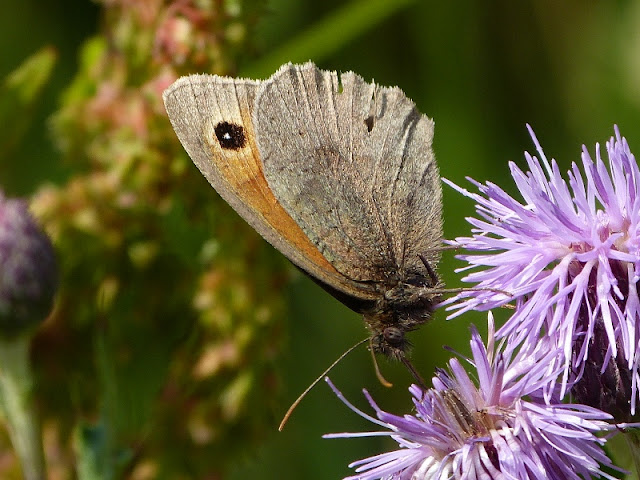
Out on the track that ran past the villa was a steep bank, covered in Thyme, which was a big attraction to butterflies (and consequently me!). Here I would regularly see Meadow Browns, Southern Gatekeepers, Spanish Gatekeepers, Small Skippers and Western Dappled Whites.


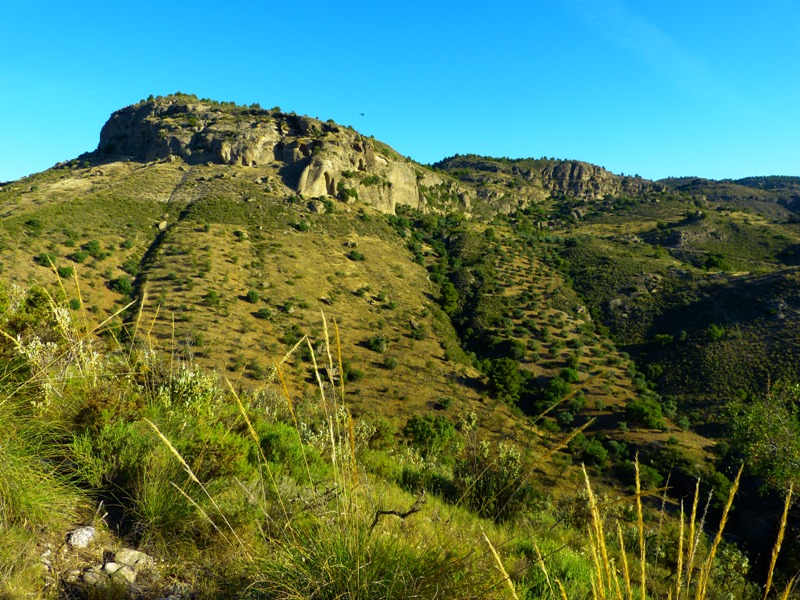
Early one morning I set off up a steep path to the top of the mountain behind the house. Here I was pleased to see a lot of Wall Browns. It was strange that I only saw them there and not lower down.


There were also beautiful Dusky Heaths along with Clouded Yellows and various other species seen nearer the villa.


A visit to an area next to the River Guadalhorce specifically to look for African Grass Blues. Eventually I managed to find a couple of very worn individuals which were being chased by Mediterranean Skippers.


Other butterflies there were Southern Brown Argus, a Southern Blue and Mallow Skippers.


Generally, I think this was a better time of year to visit, as there were certainly more butterflies flying around. The one butterfly that I normally see in the summer is Lang’s Short-tailed Blue, but we were too early for that. I find it interesting visiting the same area at different times of year. We have now been to Alora in April, June, July and September.

Tuesday, 19 July 2022

Northern Brown Argus, continued ...

As an update to my previous post. 

I have been taking part in the Scottish Borders Northern Brown Argus surveys recently. I have seen a disappointingly low number of butterflies, possibly because of the weather on the days when I have been able to survey the local area. The area is becoming quite overgrown, as it has not been grazed for about the last 15 years. It is a bit of a worry that the Rockrose may become completely swamped.


However, last week I surveyed the valley above our house including a large area of grassland above the valley. I found quite a number of patches of Rockrose and I was amazed that on almost every patch I found Northern Brown Argus eggs.


I only saw three worn adults that day, but it was pleasing to see so many eggs. They show that there must have been a decent number of adult Northern Brown Argus flying in the last few weeks.

When I arrived home I thought I should check out my area of Rockrose and I was delighted to see quite a number of eggs here. So, it seems as though there may have been more than one Northern Brown Argus here. Despite me regularly checking the area, I only saw the one. Hopefully next year there will be more.


For some reason my camera just wouldn't focus on the eggs, so I took the above picture with my phone!


Monday, 4 July 2022

Northern Brown Argus

I was amazed and delighted to spot a Northern Brown Argus, Aricia artaxerxes, flying in our garden when I took the dogs out one day last month. There is a colony of Northern Brown Argus about 500 metres up the valley from us, but they are on the other side of a mature woodland, so I can’t imagine it has flown in from there.

Three years ago I planted out some Rockrose plants on a bank close to the house. Rockrose is the foodplant of Northern Brown Argus and I realised that the stream that runs through our garden is the same stream that runs through the colony up the valley. So, I took some cuttings and successfully rooted ten plants. They are now a good size, but I don’t think the area is large enough to sustain a population of Argus.

Two years ago I briefly saw a Northern Brown Argus on the drive right outside the house, so it isn’t the first time I have seen one here. That time I only saw it briefly on one occasion. This year’s butterfly was here again two days later, so it stuck around a little longer.


There has been very little sunshine in recent weeks, so not ideal weather for seeing if there are any other Northern Brown Argus about. I will carefully check the leaves of the Rockrose a little later in the season to see if there are any signs of egg-laying.

Wednesday, 18 May 2022

Small White, Pieris rapae

On 26th July last year I saw a female Small White laying eggs on some Bittercress outside my study window. As this was in the hen run I went out and lunchtime and dug up the three small plants and put them in a pot.


On 31st July I notice that the eggs had hatched and over the next few days I kept supplying more Bittercress and cauliflower leaves for the caterpillars to eat.


On 15th August some of the caterpillars started wandering around the cage and spinning silk pads and on the 17th the first chrysalis was formed.


As the eggs had been laid by a summer generation butterfly I thought that the chrysalises wouldn't eclose until the following spring. However, I was really surprised on 26th August to see a male Small White flying around inside the cage.


The next day three females emerged and on the 28th August another three emerged, one at 11.45, one at 13.15 and one at 16.45. This last one didn’t fly off, but remained on the side of the cage. The following day was really overcast and the butterfly remained in the cage and it wasn’t until 11.45 on the 30th August that it flew off.

It circled the garden a couple of times and then landed in an ornamental maple tree. Almost immediately heavy drizzle started to fall and it continued to drizzle for the rest of the day and the following morning. Later that day I found it still in the same spot and it flew off mid-afternoon. So, it spent the first three days of its life waiting for suitable weather to fly!

What I find really interesting is that of the nine chrysalises I had, seven emerged, but the other two remained in the pupal state. I hadn’t been expecting any of them to emerge, as  we would normally only expect to have two generations of Small Whites a year here. The seven chrysalises that eclosed formed a third generation of the year.

Fast forward to spring this year and I kept an eye on the two remaining chrysalises. On 3rd May I noticed that they had started to show the colour of the wings. Two days later I spotted a male Small White sitting by its empty chrysalis case.  The following day a female Small White emerged from the second chrysalis.


I was interested last year to see a third generation of Small Whites. Something that I have never known here before. What was more interesting, though, was that seven of the chrysalises emerged last year and the other two waited until this spring. They were all kept in identical conditions, yet behaved differently.


Friday, 1 April 2022

East Lothian Grayling Project

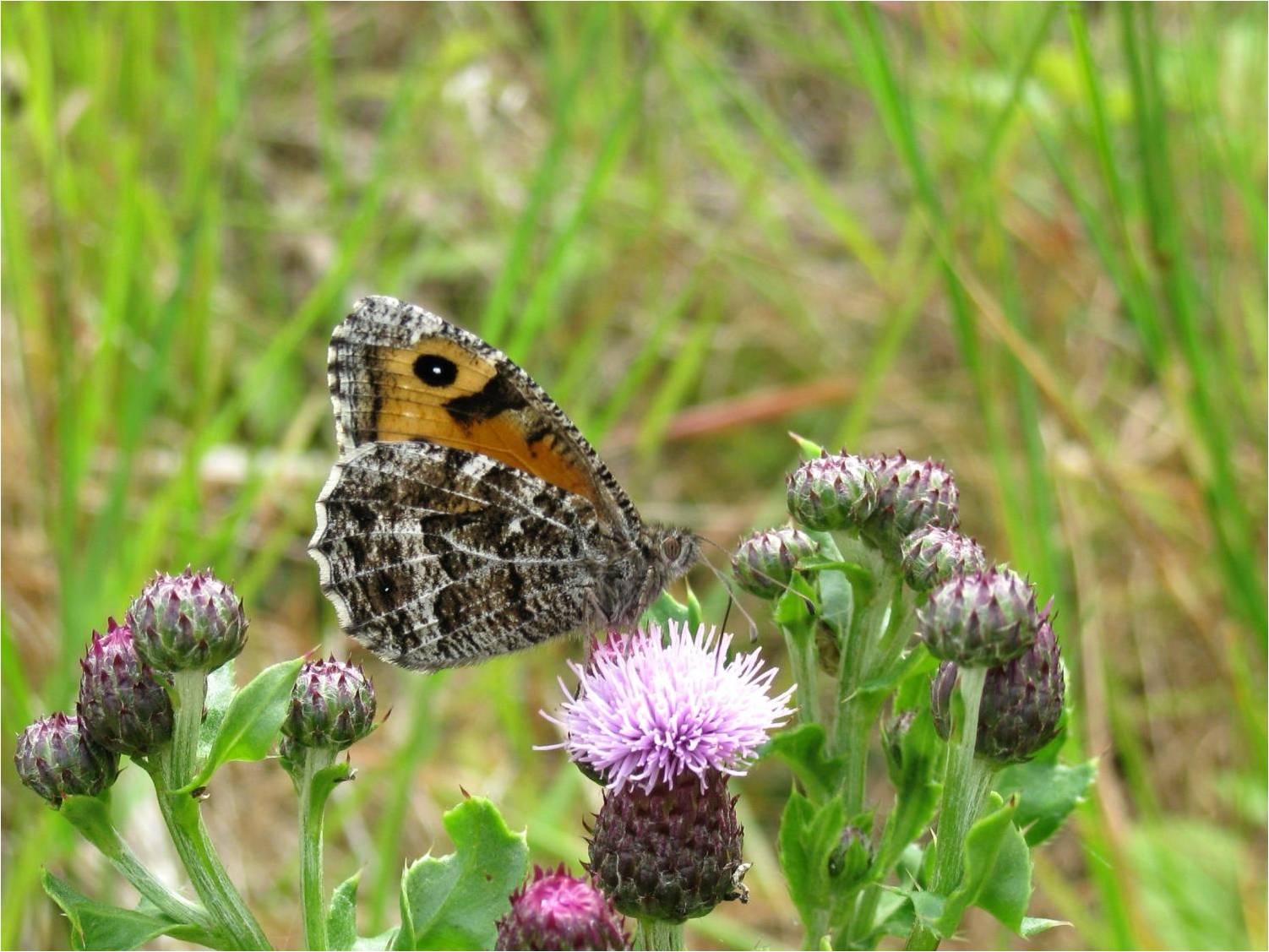
For the last four years I have been involved with an exciting project to try to create a new habitat for Grayling butterflies, Hipparchia semele.

Grayling are only known to occur in three small colonies in East Lothian. One is in a steep-sided valley, or cleugh, in the Lammermuir Hills. The other two locations are ex-industrial sites – one on a disused railway siding of an old opencast coal mine called Blindwells, the other a re-landscaped tip from an old coal mine called Meadowmill.

The colony at Blindwells was discovered in 2009 and it is suspected that Graylings could have been there for a few years before that. In 2011 they were found on the old coal tip at Meadowmill, which is just across the road. This colony is now the larger of the two and I think the maximum count of Grayling seen there was 80.

There have long been plans to build a new town at Blindwells, but there seemed to be so many issues surrounding this that we doubted it would ever happen. However, in 2017 we were alarmed to see fencing going up around the site and bulldozers moving in.

So, very quickly, a plan was hatched. The idea really came from a countryside volunteer who persuaded the East Lothian Countryside Rangers that we should try to translocate the Blindwells Grayling colony to somewhere safe.

East Lothian Council own another ex-industrial site, Levenhall, which is being restored for recreation and wildlife. The Countryside Ranger who works there identified a perfect south-facing slope. I just happened to be in the office one day and overheard the Parks Manager complaining that he was going to have to pay to dispose of a few hundred tonnes of crushed concrete from a depot that had been demolished. This, we thought, would make the perfect material to create a new Grayling colony.

In 2018 we attended the AGM of the East of Scotland branch of Butterfly Conservation, where they said that there was funding available for projects. Perfect, we secured funding to scrape the top soil from a site about 50 metres long by 30 metres. On one side we spread the crushed concrete in three long piles to replicate the railway sidings and on the other side of the site we asked the contractor to leave random piles of crushed concrete. Hopefully this would provide a variety of different slopes and orientations.


With the help of more volunteers, including the Junior Rangers, we removed rubbish (it is amazing how much wire and plastic there was amongst the concrete). The area was then seeded with Red Fescue and Sheep’s Fescue (the foodplant of the Grayling caterpillars) and dry meadow mix wild flower seeds were scattered along the lower slope. Between the two areas was a grassy strip, which has also had wild flower seeds, including Yellow Rattle sown.

The next problem was how to get the butterflies there. We devised several plans. Initially we searched for caterpillars at Blindwells. We were told they were easy to find at night using a torch, as they climb up grass stems to feed. Five of us crawling in the grass one night for two hours unearthed one caterpillar in May 2018.

So, we then decided to try to locate eggs in August. The sidings at Blindwells were now protected by Heras fencing, but we needed permission and full protective clothing to get in and this had to be arranged a few weeks in advance. By the time we managed to get in we discovered the site covered in dust with a diesel generator running next to it. Sadly, we found no eggs.

So in July 2019 we decided to look for eggs at Meadowmill. They were reasonably easy to find and we collected 36 eggs and we took them to Levenhall, where they were put on the now well-established Fescues.

In the summer of 2020 we regularly monitored our new site in the hope of seeing adult Grayling flying, but sadly none were seen. So, in July the Countryside Ranger caught 12 adult Graylings at Meadowmill and translocated them to Levenhall. They were put in a cage overnight, which was removed early the next morning. Five of them were still there at lunchtime, so we hoped they may have laid some eggs.

Unfortunately, we didn’t manage to record any adult Grayling there again in the summer of 2021. So, it looks as though that attempt may also have failed.

Creating a new site for Grayling butterflies has never been done before, so we made it up as we went along. We had a lot of good fortune and it has been really exciting to be involved in such a project.

We are now wondering if there is some crucial element missing from our new site. We have a south-facing slope with Fescues growing on it, but what else could it need. Two of the existing colonies are associated with coal, but the other colony is in a natural valley. Do they need a particular chemical make up in the soil, is there some sort of symbiotic relationship with ants, possibly it is something even more subtle such as bacteria, or a fungus that is required. Maybe things will change over time.

We will certainly keep monitoring the site and consider how we can persuade Graylings to move in. Last year 17 species of butterflies were recorded at the new site, so it is clearly attractive to butterflies.
Sunday, 20 February 2022

East Lothian Butterflies 2021 Part 2

Continuing on from my previous post ...

Ringlets started to appear on the 6th June, which is the earliest I have known over the last ten years. They did well and had a longer than normal season. Normally they are only around for seven to nine weeks, but in 2021 they were recorded over 11 weeks.


Large Skippers
were another 2021 success story. Having first been recorded in East Lothian in 2014, they made slow progress westwards along the foothills of the Lammermuirs. Over the intervening years I only received a handful of records of them. In 2021 I received 11 records, many of which were from Levenhall Links. There was also a record from John Muir Country Park and the Lammermuir Hills.


Meadow Browns
had an amazingly good year. In fact I received more records of them in 2021 than in any previous year, which is great because I had been worried that numbers had been declining over the last few years. The first record was on 16th June. Interestingly they had quite a short season with the last record coming in on the 1st September.


The Small Skipper had an exceptional year. Their numbers have increased year on year since they were first discovered in East Lothian in 2011. The first record was received on 17th June, which is a week earlier than in previous years, and I received records of 1643 Small Skippers, more than three times the average of the last few years.


The first record I received of a Dark Green Fritillary was on 21 June. These butterflies also had a very good year and I received more records of them than in any previous year.


It is interesting to note that the species that emerged from May onwards did very much better than the species that emerged earlier in the year. I can only put this down to the cold weather we had in the late spring.

There were a number of other species recorded in East Lothian in 2021. Some of them are regularly seen, but only in small numbers and others are rare migrants.

We had a few sightings of Green Hairstreaks in May from two sites. They are known to occur in a few different locations, but they are mostly remote and difficult to access. It is likely that there are a lot more of them around than we are aware of.


On 5th June there was a sighting of a Clouded Yellow flying along the coast at Longniddry. They are occasionally recorded in East Lothian and are migrants that have ventured north from mainland Europe.

The only Small Pearl-bordered Fritillary I am aware of in East Lothian in 2021 was one that I saw in the Lammermuirs on 29th June. They are a very rare butterfly in East Lothian, only having been recorded from a couple of sites.


Another exciting butterfly seen in East Lothian was the Brimstone. In fact there were four of them seen in 2021, two in June, one in July and one in August, all in different locations across the county. They are seen once or twice every few years and are considered to me migrants from England. Their distribution matches the distribution of the caterpillar food plant, Alder Buckthorn, which doesn't occur naturally in Scotland. However, it is interesting to speculate whether there could be a colony of Brimstones somewhere in an East Lothian garden.

I usually say that there are four known colonies of Northern Brown Argus in East Lothian. Two of these locations are really small and I fear that the colonies may have died out in them. There are, however, two strong colonies at either end of the Lammermuir Hills and I was pleased to hear that they have also been found in a location close to Traprain Law. It is difficult to assess how well they are doing with so few records. I saw some on 29th June and I heard of one other being seen on 24th July.


There were only three records of Graylings this year between 29 June and 14th July, all from the same site. I only know of three sites where they occur in East Lothian, one in the east of the Lammermuirs, one in the middle of the housing development at Blindwells and on the pyramid at Meadowmill. Sadly there were no records from the new site we have created for them at Levenhall Links.


A very rare sighting, accompanied with a photograph, of a Camberwell Beauty was reported on 14th September in North Berwick. I am only aware of two other sightings in East Lothian in the last 40 years, one in 2019 and the other back in 1984.

This last butterfly meant that we recorded 27 species of butterflies in East Lothian in 2021. I think this must be a record for the county. Over the last 50 years we have seen an increase in the number of species that breed in East Lothian, most of these species are extending their range northwards, apparently in response to climate change. In 2021 we also had three unusual visitors.

I would like to extend a big thank you to everyone who has sent in records over the last few years. This has helped to build up a great picture of how butterflies are doing in East Lothian. Every record makes a big difference, no matter how common you think the species is, or how insignificant a single record may appear. I was in touch with Butterfly Conservation a few years ago and they said that it is just as important to send in records of common species as it is for an exciting rarity. Otherwise in the future people may consider that green-veined Whites or Meadow Browns used to be uncommon.

I am looking forward to hearing about the first butterfly of 2022.


Followers